The American backyard is undergoing a remarkable transformation. What was once considered a simple outdoor area with a grill and a few chairs has evolved into a fully functional extension of the home. Across the United States, homeowners are investing heavily in stylish outdoor furniture, luxury kitchen installations, and smart backyard technology that blends comfort, entertainment, and convenience.
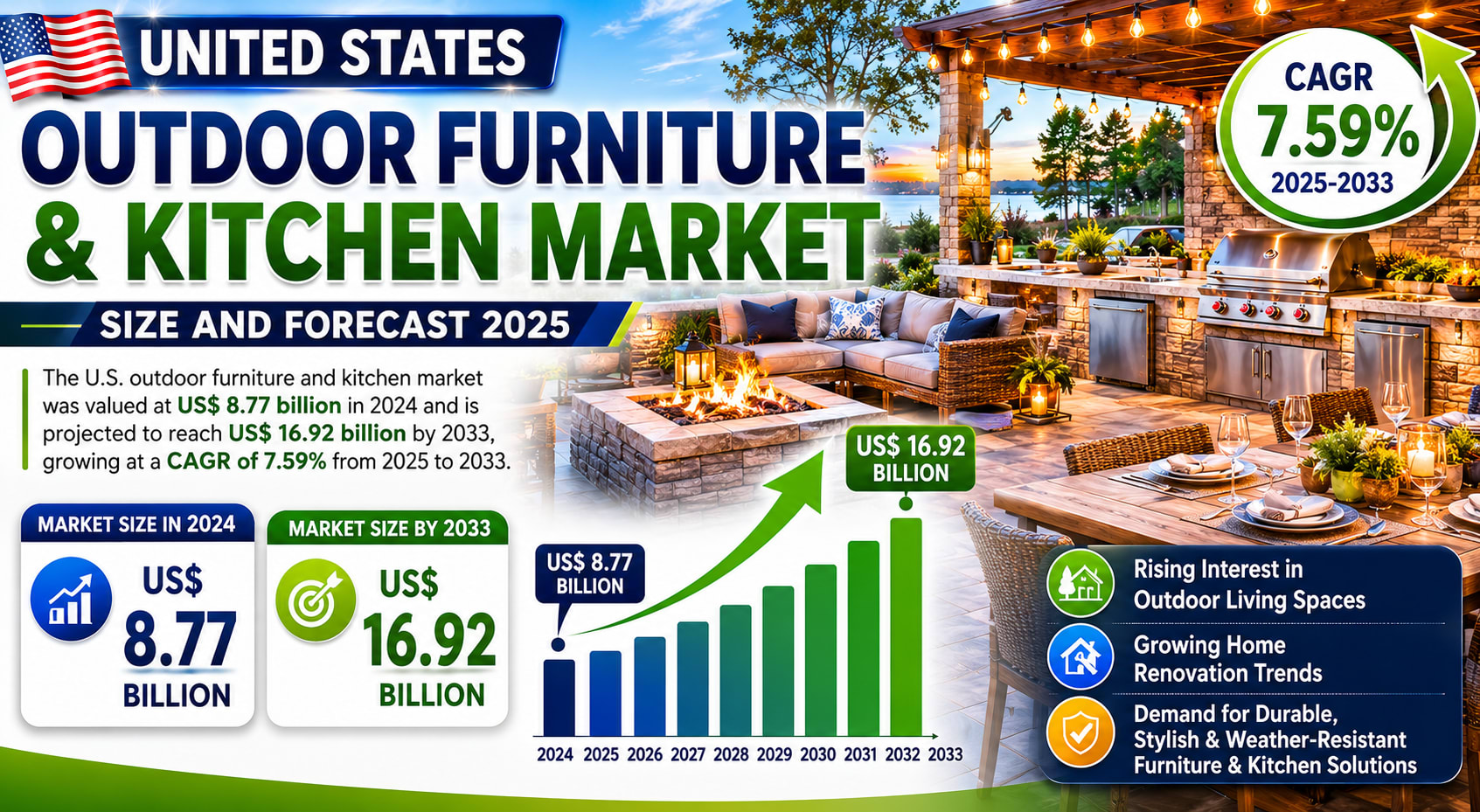
This growing lifestyle movement is creating major opportunities for the outdoor furniture and kitchen industry. According to Renub Research, the United States outdoor furniture and kitchen market was valued at US$ 8.77 billion in 2024 and is expected to reach US$ 16.92 billion by 2033, growing at a CAGR of 7.59% from 2025 to 2033. The market’s expansion reflects changing consumer lifestyles, increased spending on home improvement, and rising interest in outdoor leisure spaces.
As homeowners continue transforming patios, gardens, rooftops, balconies, and poolside spaces into luxury living areas, outdoor furniture and kitchen products are becoming essential features of modern residential and commercial properties.
Outdoor Living Is No Longer Optional
Over the last few years, outdoor living has shifted from a seasonal activity to a permanent lifestyle trend. Americans are increasingly treating outdoor areas as additional rooms rather than separate spaces.
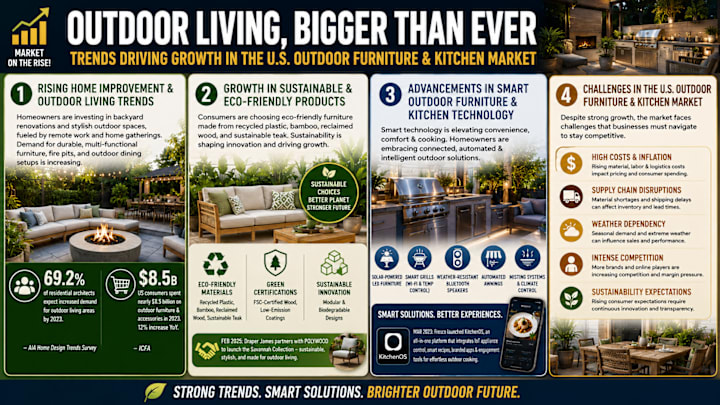
This change has been influenced by several factors, remote and hybrid work culture, growing interest in home renovation projects, increased focus on wellness and relaxation, demand for social gathering spaces at home, and rising popularity of outdoor dining and entertainment.
Consumers are now designing outdoor areas with the same level of attention they give to interior spaces. Comfortable seating arrangements, decorative lighting, weather-resistant fabrics, and customized layouts are becoming standard features in many households.
Architects and interior designers have also reported increased requests for outdoor-focused renovation projects. Many homeowners now prioritize patios, decks, and gardens during remodeling efforts because these upgrades improve both property value and everyday living experiences.
The trend is especially strong among younger homeowners and high-income households seeking resort-style comfort within their own properties.
The Rapid Rise of Outdoor Kitchens
One of the biggest drivers of market growth is the increasing demand for outdoor kitchens.
Traditional barbecue grills are no longer enough for many consumers. Today’s homeowners want complete cooking environments that support entertaining, convenience, and luxury experiences.
Modern outdoor kitchens often include, stainless steel countertops, smart grills, outdoor refrigerators, built-in sinks, pizza ovens, storage cabinets, beverage coolers, and dining islands.
Outdoor kitchens are becoming gathering points for family events, celebrations, and weekend entertainment. Homeowners appreciate the ability to cook, dine, and socialize without constantly moving between indoor and outdoor spaces.
States with warmer climates such as California, Texas, Arizona, and Florida are seeing especially high demand because outdoor spaces can be used comfortably throughout the year.
At the same time, compact modular kitchen systems are gaining popularity among urban homeowners with smaller terraces and rooftop areas. These systems provide flexibility while maintaining functionality and stylish design.
As outdoor entertaining becomes more common, the outdoor kitchen segment is expected to remain one of the strongest growth categories in the market.
Smart Technology Is Changing Outdoor Experiences
Technology is playing an increasingly important role in the outdoor furniture and kitchen industry.
Consumers are now seeking smart outdoor products that improve comfort, convenience, and entertainment. Modern outdoor living spaces are becoming connected environments equipped with advanced digital features.
Popular smart outdoor innovations include, Wi-Fi-enabled grills, solar-powered LED furniture, Bluetooth speaker systems, automated awnings, smart lighting controls, weather-monitoring systems, self-cleaning appliances, and automated misting systems.
These features appeal particularly to younger consumers who value automation and seamless connectivity within their homes.
One major technological development came when Fresco introduced KitchenOS, an operating system designed to connect smart kitchen appliances into one integrated ecosystem. The technology allows users to manage outdoor cooking systems more efficiently while enhancing personalization and convenience.
As smart home ecosystems continue expanding, outdoor spaces are expected to become increasingly connected and technology-driven.
Sustainability Is Influencing Consumer Buying Decisions
Environmental awareness is becoming a powerful force in the outdoor furniture market.
Consumers are paying closer attention to the environmental impact of the products they purchase, leading to rising demand for sustainable and eco-friendly materials.
Popular sustainable materials include, recycled plastics, bamboo, reclaimed wood, sustainably sourced teak, and low-emission coatings.
Manufacturers are responding by developing environmentally responsible production methods and introducing furniture designed for longer product lifecycles.
Furniture made from recycled materials has become particularly attractive because it combines durability with sustainability. Buyers are also increasingly interested in certifications that verify responsible sourcing and eco-friendly manufacturing practices.
An example of this sustainability movement is the collaboration between Draper James and POLYWOOD, which combines stylish outdoor design with environmentally responsible materials.
Sustainable outdoor furniture is no longer considered a niche market. Instead, it is rapidly becoming a mainstream consumer expectation.
Design and Comfort Are More Important Than Ever
Outdoor furniture is evolving beyond basic functionality.
Consumers now expect outdoor products to deliver the same level of comfort, style, and aesthetic appeal as indoor furniture.
Current design trends include, minimalist layouts, neutral and earthy color palettes, modular seating systems, ergonomic loungers, UV-resistant cushions, lightweight aluminum frames, and multi-functional storage furniture.
Outdoor loungers have become particularly popular as homeowners attempt to recreate luxury resort experiences at home.
Modern loungers often feature reclining systems, ergonomic support, waterproof materials, and hidden storage solutions. Consumers are prioritizing furniture that combines visual appeal with long-term durability.
Outdoor chairs are also experiencing strong demand, especially Adirondack chairs, folding patio chairs, and stackable seating designed for convenience and flexibility.
As outdoor living spaces become more sophisticated, furniture design is expected to continue evolving toward comfort-focused luxury.
Wood and Metal Continue Dominating the Market
Material selection remains one of the most important factors in outdoor furniture purchasing decisions.
Wood remains highly popular because of its natural beauty, timeless appeal, and durability. Materials such as teak, cedar, acacia, and reclaimed wood are widely used for outdoor dining tables, cabinets, seating arrangements, and decorative features.
Wooden furniture is especially attractive for homeowners seeking rustic or farmhouse-inspired aesthetics.
Meanwhile, metal furniture is gaining momentum due to its sleek appearance and long-lasting performance.
Stainless steel and powder-coated aluminum are commonly used in outdoor kitchen systems because they resist rust, moisture, and heat effectively. These materials are ideal for modern outdoor environments where durability is essential.
Many manufacturers are also combining wood, stone, and metal to create hybrid designs that appeal to consumers seeking contemporary luxury aesthetics.
Hospitality and Commercial Spaces Are Driving Growth
The commercial sector is becoming a major contributor to market expansion.
Restaurants, hotels, resorts, rooftop lounges, and entertainment venues are investing heavily in outdoor furniture and kitchen systems to improve customer experiences.
Outdoor dining became especially important after the pandemic, when businesses expanded exterior seating to accommodate changing consumer preferences and safety concerns.
Today, outdoor hospitality spaces remain highly desirable.
Commercial buyers are prioritizing, durable weather-resistant furniture, stylish dining layouts, flexible seating arrangements, outdoor bar installations, modular kitchen stations, and UV-protected materials.
Luxury hotels and resorts are also using premium outdoor environments to strengthen brand image and attract travelers seeking upscale experiences.
As tourism and hospitality continue recovering and expanding, commercial demand is expected to support long-term market growth.
E-Commerce Is Reshaping the Industry
Online shopping has dramatically changed how consumers purchase outdoor furniture and kitchen products.
Customers now benefit from, large product selections, competitive pricing, home delivery services, customer reviews, virtual consultations, and augmented reality previews.
Direct-to-consumer brands are also becoming increasingly popular because they eliminate middlemen and offer more customization options.
At the same time, physical furniture stores continue playing an important role in the market. Many consumers still prefer visiting showrooms to test comfort levels, inspect material quality, and compare styles before making large purchases.
As a result, retailers are increasingly adopting hybrid business models that combine online convenience with in-store experiences.
This balance between digital and physical retail is expected to shape the future of the industry.
Regional Trends Across the United States
Outdoor furniture and kitchen preferences vary significantly across different regions of the country.
Eastern United States
The Eastern market is heavily influenced by diverse weather conditions.
Consumers in coastal regions often prefer corrosion-resistant materials such as teak and aluminum, while colder northern states prioritize weatherproof furniture capable of handling snow and freezing temperatures.
Urban homeowners in cities like New York and Boston also favor compact furniture designed for balconies and rooftop patios.
Western United States
The Western region remains one of the strongest outdoor furniture markets in the country.
States such as California and Arizona enjoy favorable weather conditions that support year-round outdoor living. Consumers in these areas prioritize luxury entertainment spaces, UV-resistant furniture, outdoor kitchens, and sustainable product designs.
The outdoor lifestyle culture of the West continues driving strong market demand.
Challenges Facing the Outdoor Furniture Industry
Despite strong growth projections, the market still faces several challenges.
High Costs of Premium Products
Durable outdoor furniture often comes with high price tags due to the cost of premium materials and advanced weatherproofing technologies.
Products made from teak, stainless steel, and smart integrated systems can be expensive for average consumers.
Shipping and logistics costs for large furniture items also contribute to higher retail prices.
Manufacturers must balance affordability, durability, and innovation to remain competitive.
Seasonal Demand Fluctuations
The industry is highly seasonal, with demand peaking during spring and summer.
Sales often decline significantly during colder months, especially in northern states where harsh weather limits outdoor activities.
Extreme climate conditions such as hurricanes, snowstorms, and heatwaves can also influence consumer purchasing behavior and inventory planning.
To address these issues, many companies are introducing all-weather furniture and protective accessories that extend product usability throughout the year.
Why the Market’s Future Looks Strong
Despite challenges, the long-term outlook for the U.S. outdoor furniture and kitchen market remains highly promising.
Several powerful trends continue supporting growth, rising disposable income, increased investment in home improvement, growing popularity of outdoor entertaining, expansion of smart home ecosystems, sustainability-focused purchasing behavior, and strong hospitality industry demand.
Outdoor spaces are increasingly viewed as essential parts of the home rather than optional luxury additions.
This shift is fundamentally changing how Americans design and use their living environments.
Manufacturers that focus on innovation, sustainability, comfort, and customization are likely to dominate the market in the years ahead.
Final Thoughts
The United States outdoor furniture and kitchen market is entering a period of rapid transformation driven by lifestyle changes, technological innovation, and rising consumer expectations.
Homeowners are no longer satisfied with simple patios or basic grills. They want outdoor environments that offer comfort, functionality, luxury, and smart connectivity comparable to indoor spaces.
From eco-friendly furniture and modular kitchen systems to Wi-Fi-enabled grills and luxury loungers, the industry is evolving quickly to meet modern consumer demands.
According to Renub Research, the market’s projected growth from US$ 8.77 billion in 2024 to US$ 16.92 billion by 2033 demonstrates the enormous potential of this industry in the coming decade.
As outdoor living continues becoming a central part of American lifestyles, businesses that prioritize design innovation, sustainability, and smart technology will likely emerge as industry leaders.
The future of outdoor living is no longer just about patios and furniture — it is about creating fully immersive lifestyle experiences right at home.
Source link ← Back to News