New York state officials, bowing to political headwinds, have agreed to push back a long-awaited report on reparations for slavery to 2029, officials said.
Assemblymember Michaelle A. Solages, chair of the Black, Puerto Rican, Hispanic and Asian Legislative Caucus, told Gothamist the two-year delay, which was embedded in the latest state budget, came at the request of the state’s Reparations Commission, charged with studying the harm tied to enslavement.
Solages, a Nassau County Democrat, said the “erosion of Black power in the South” as well as the Trump administration’s attacks on diversity, equity and inclusion initiatives necessitated a slower, more considered approach to the commission’s work.
“Now it’s more important than ever for us to have a report that is accurate and up to date, to look at the systematic disenfranchisement of not only Black individuals but those who have been marginalized for so long,” Solages said.
Aides to Gov. Kathy Hochul referred questions to the commission, formally known as the New York State Community Commission on Reparations Remedies. Seanelle Hawkins, chair of the commission, did not address the extension in a statement, but said the state panel had collected 200 hours of testimony to date and would continue to host public hearings across the state, including a May 23 hearing in Hempstead and a May 30 hearing in Harlem.
“We encourage all New Yorkers to share their voice and engage the commission, in-person or virtually,” Hawkins said.
The commission was initially required to submit a report last summer, but that deadline was pushed back to 2027, and now to 2029, nearly four years after its initial deadline. The inquiry gained momentum amid the racial reckoning that followed the murder of George Floyd by police in Minneapolis in 2020.
Hochul signed a bill establishing the commission in 2023. It was designated “to examine the institution of slavery, subsequently de jure and de facto racial and economic discrimination against people of African descent, and the impact of these forces on living people of African descent and to make determinations regarding compensation.”
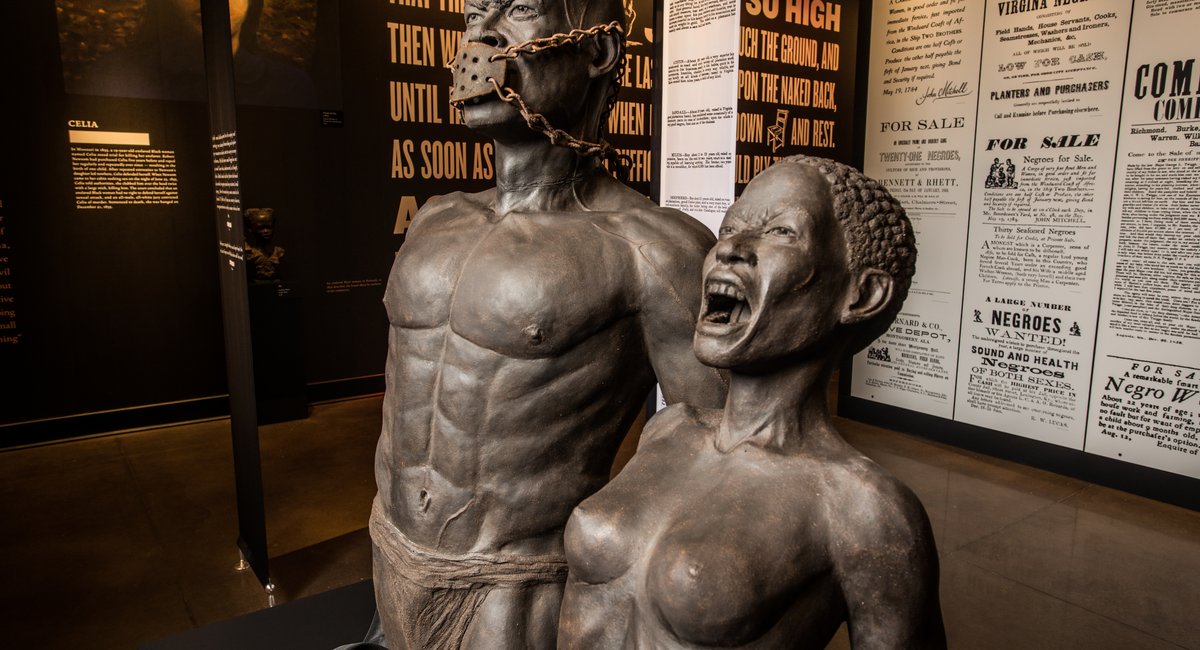
The law recounted the arrival of the first enslaved Africans in New York in 1627 through the development of Jim Crow laws and discriminatory 20th century practices like redlining.
“The consequences of these past practices are still with us today,” the law stated.
But efforts to address past and ongoing harms have been significantly scaled back since then. California Gov. Gavin Newsom vetoed several measures that would have provided reparations, arguing that they were “unnecessary” and made difficult by fiscal challenges.
At the national level, President Donald Trump’s administration has taken aim at race-sensitive initiatives in both the private and public sectors. A series of Supreme Court rulings have also struck down race-conscious measures related to affirmative action and voting rights.
Activists and elected officials have pushed for reparations payments for decades but public polling indicates that reparations are deeply unpopular, with nearly 7 out of 10 Americans expressing opposition, according to a 2021 Pew Research Center survey.
State elected officials say nonetheless that the issue of reparations must be studied closely, particularly given New York’s history.
In the mid-18th century, 42% of New York City’s white residents directly enslaved Black men and women, according to the Equal Justice Initiative, and in the 19th century, 40% of all revenue from the American cotton trade passed through the city, helping generate enormous wealth for white financiers and shippers. Many elected officials and city leaders opposed emancipation, according to the group.
State Sen. James Sanders, a Queens Democrat who has championed the cause of reparations for years, said the deadline extension had to be seen in a larger context.
“The Reparations Commission extension is being proposed for one simple reason: The Reparations Commission must be given the time and protection necessary to do this work thoroughly and responsibly,” Sanders said in a statement. “The history of slavery and systemic racism in New York spans centuries, and gathering the records, testimony, and data required to fully understand its impact cannot be rushed.”
Solages said that in addition to the new deadline, commissioners would be indemnified in order to protect them from legal exposure.
“Right now, the commission is not considered officers under the Public Officers Law, which means that they could get sued for something they have done in their official capacity,” Solages said.