1
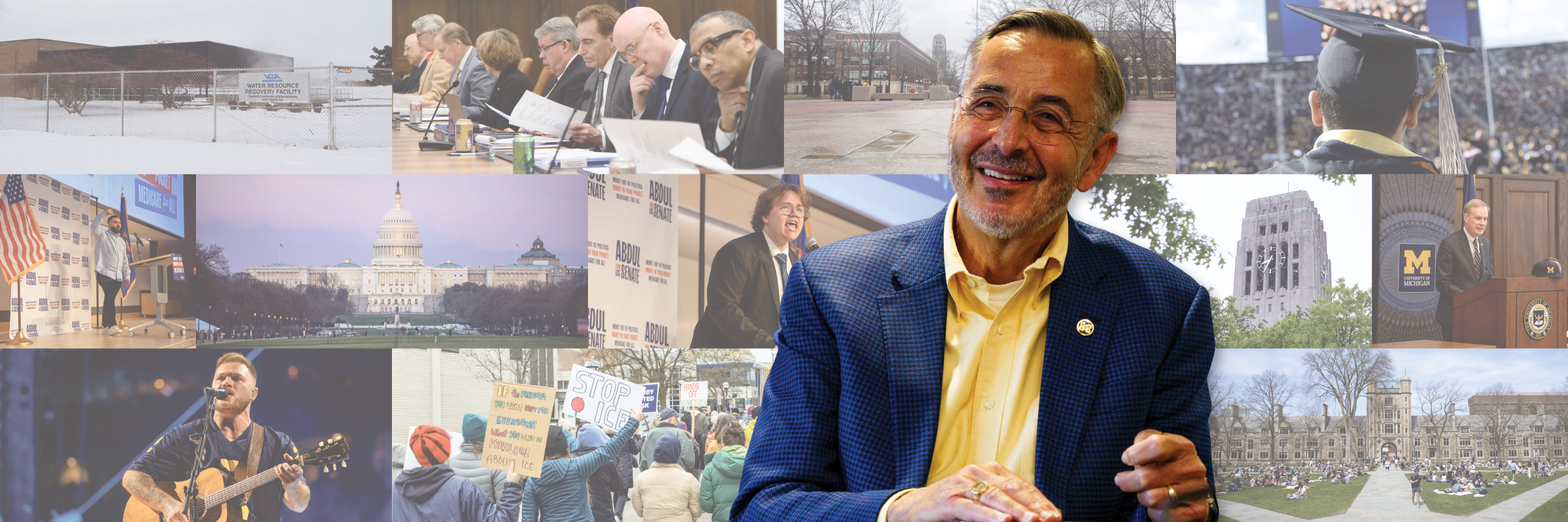
The 2025-26 academic year commenced on Aug. 25, as the University of Michigan welcomed a record number of new students to campus. A total of 9,711 new undergraduate students — composed of 8,178 freshman and 1,533 transfer students — joined the campus community as the University earned its spot as the 20th best university nationwide, while preserving its ranking as the third best public university.
2
The University continued to set records going into September. Country singer Zach Bryan headlined the very first concert at the Big House on Sept. 27, with 112,408 attendees packed into the stands — the largest concert in U.S. history. Bryan welcomed guests such as John Mayer, seven-time Grammy award winner, while performing chart-topping hits from across his discography. The inaugural concert opened the door for future shows in the Michigan Stadium, including performances by country singer Morgan Wallen, who will play two shows in July.
3
However, Ann Arbor was not immune to the politics of Washington, D.C., including the federal government shutting down Oct. 1 after failing to reach an agreement on funding for the 2026 fiscal year. Ripple effects of the shutdown — which continued for 43 days, marking the longest shutdown in U.S. history — created confusion for those utilizing federal research funds, and caused chaos for students traveling home for Thanksgiving break. On Nov. 1, statewide disruption to the Supplemental Nutrition Assistance Program caused strain for many Michigan families.
4
Locally, members of Ann Arbor and the neighboring communities began protesting the University’s development of their proposed data center. After purchasing land in Ypsilanti Township, the University announced plans to build a $1.25 billion data center in partnership with Los Alamos National Laboratory. The University claims the facility will be used for academic and federal research purposes, and one Los Alamos representative confirmed the facility will be used for nuclear weapons research. Many community members have expressed frustration regarding potential environmental and fiscal impacts, including concerns over the project’s transparency.
5
In January and February of 2026, Washtenaw County experienced a significant increase in U.S. Immigration and Customs Enforcement activity. The Washtenaw County Board of Commissioners passed a resolution Jan. 21, restricting ICE agents from county property in response to the fatal shootings of Renee Good and Alex Pretti from ICE agents in Minneapolis. Less than a week later, ICE agents were seen near a Ypsilanti Community School campus detaining parents. Soon after, the Ann Arbor Police Department confirmed the presence of ICE agents in downtown Ann Arbor. This prompted the University to publish guidance for interactions with ICE. Protestors demanded ICE be removed from Ann Arbor and that the University take action to protect the U-M community. In April, the Trump administration sued Washtenaw County over policy measures that protect undocumented immigrants.
6
On March 27, the student body elected LSA rising juniors Summit Louth and Naimah Perez of the Human Rights Party as 2026-27 president and vice president, respectively, of the University’s Central Student Government. Louth and Perez’s platform focused on progressive advocacy and campus affordability. The Human Rights Party is a party focused on student activism, progressive politics and University divestment from Israel.
7
The University’s Board of Regents held a special meeting Jan. 12 to officially appoint Kent Syverud, chancellor and president of Syracuse University, as the 16th University president, succeeding Interim President Domenico Grasso. On April 15, two weeks after Grasso’s final presidential interview with The Michigan Daily, Syverud announced he was recently diagnosed with brain cancer and would step down from his appointment. Later that day, Board Chair Mark Bernstein (D) announced in a video to the campus community that Grasso would continue his tenure until a new president is selected.
8
At the Michigan Democratic Party’s State Endorsement Convention on April 19, progressive challenger Amir Makled beat incumbent Jordan Acker in the race to be one of two Democratic nominees to the University’s Board of Regents. Acker is seen by many progressive activists as representative of the Board’s current policies, such as ending the University’s Diversity, Equity and Inclusion programs; cutting gender-affirming healthcare for patients under the age of 19; and prosecuting pro-Palestine student protesters. The victory of Makled — who provided legal representation for protesters and has been critical of the current Board — was perceived by many convention attendees as a major progressive upset. Makled will appear on the ballot alongside incumbent Regent Paul Brown (D) on Election Day.
Summer Managing News Editors Alexa Cheaney and Brady Middlebrook can be reached at [email protected] and [email protected].
Related articles
Source link ← Back to News