
As entertainment continues to expand across film, gaming, audio, sports, creator content, and immersive experiences, storytelling itself is becoming increasingly fluid — shaped as much by participation and fandom as by craft itself. At the 2026 D&AD Awards, the Entertainment jury examined branded and brand-funded work that audiences actively choose to watch, seek out, remix, and share, reflecting a wider shift in how culture is created and consumed.
In an adobo exclusive interview with adobo Magazine Founder, President, and Editor-in-Chief Angel Guerrero, BBDO India Chief Creative Officer and Entertainment jury member Josy Paul reflects on the emotional depth, fandom, and human connection that defined this year’s Entertainment category. Known globally for culturally transformative campaigns such as “Share The Load” and “Touch The Pickle,” Josy shares why entertainment today succeeds not through spectacle alone, but through work that people feel compelled to carry into their own lives and communities.
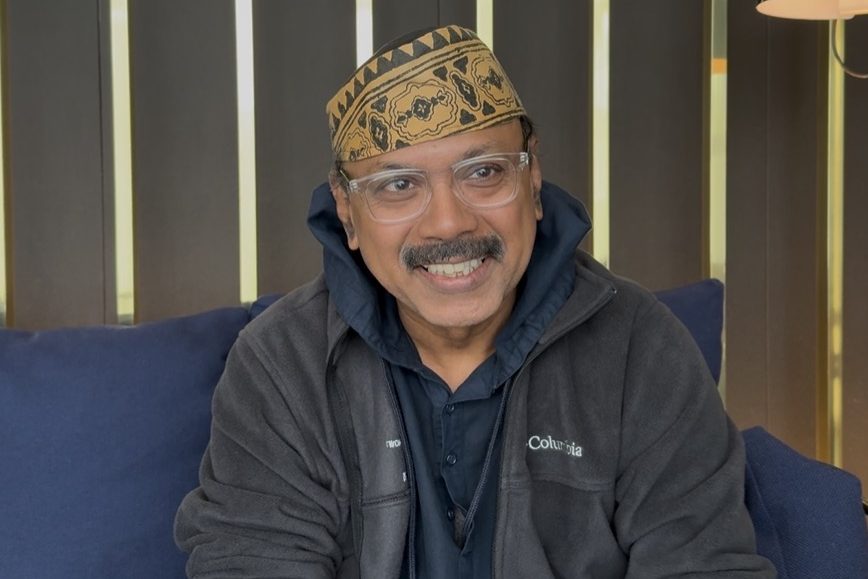
adobo Magazine: How did the jury evaluate work that pushed boundaries in the Entertainment category?
Josy: I think one of the big things is how these things enter culture. I know this is a word that’s being used often these days, but there’s an element of fandom — people don’t just want to watch, they want to engage and, more importantly, share and remix. They want to do things with it. Entertainment today is actually “intra-attainment,” if I may use that word, because people want to use it to interact with others. And that’s the beautiful thing about the new entertainment world.
adobo: What is one thing that defines great entertainment across film, gaming, audio creators, and immersive experiences?
Josy: I think it’s the emotional connection, beyond everything else. I mean, you may talk about production, AI, tech, and all the new experiential things, but in the end, if there is no emotional connection, if there is no depth — something that makes you feel, “This is me,” or “This is something I need to use to help someone” — then it doesn’t work. It has to do something for you or for someone else.
There are enough beautiful examples. There’s “Captions with Intentions,” which is very AI-driven — it’s a beautiful idea, right? But it’s useful for someone, and you want to show it to people and say, “Look at this, isn’t that amazing?”
https://www.youtube.com/watch?v=F48khKZhKHM
Then there’s this film we watched, one we’d seen before, about the lady who came up with “Because You’re Worth It.” I’ve been sharing it with so many people because it’s so emotional. It makes me cry. It makes me feel good about being in the industry. It tells me the power of words. It’s all of these things. It’s not just entertainment — it’s so much more than that. It’s a whole world. We’re in a good place now in advertising. We have that opportunity.
adobo: What do you think makes an audience choose to watch, share, and emotionally invest in branded entertainment today, considering entertainment is no longer a disruption?
Josy: When people look at entertainment or branded entertainment, they’re not looking at brands. They’re not thinking, “Oh, if it’s branded, I’m not going to share it.” It’s about the content and the context. People don’t see branded work as any less valuable. What matters is what’s within it.
It may be branded or not branded, but they’re equal as long as the brand isn’t pushing itself or trying to sell an agenda. People are fine sharing it as long as it feels like it belongs to them. It must feel like, “Hey man, I wish I could write this, but I couldn’t, so I’m using this to share something with my wife, my daughter, my son who’s going through something,” whatever it is.
So yeah, it’s that feeling of, “I wish I could write this, but I can’t, so let me use this to connect with someone.” And I don’t mind if it’s Nike or any other brand, as long as they’ve given me something that allows me to connect and reconnect.
adobo: Many brands want to act like entertainment companies. What do they still misunderstand about the craft of storytelling?
Josy: I think it’s the fundamental principles of storytelling. There has to be a tension point or some kind of conflict that needs to be resolved. If you look at classic storytelling models, there’s always a barrier that someone has to cross. That’s why “Star Wars” is “Star Wars.” People have studied it as the ultimate construct for storytelling. I think it really comes down to those fundamental points of how a story is told and why it’s told.
adobo: Did AI and emerging technologies elevate storytelling this year?
Josy: That was probably the biggest battle in the room, because you had an AI-driven piece that was fabulous, and then you had a non-AI handcrafted piece that was also fabulous. They both lived in the same world and had the same sort of impact.
So we were seeing how both could coexist. It’s not because something is AI-generated or experimental that it automatically rises above everything else. I think the jury was mature enough to see that, in the end, it’s about how it impacts me, impacts us, impacts all of us. So yeah, they coexisted beautifully.
adobo: In creator- and influencer-led work, what distinguishes true creative collaboration from borrowed reach?
Josy: I think it’s when the influencer or celebrity feels like more than just a mouthpiece or sponsor for the piece. It has to feel like something they genuinely own and are part of.
There was this one entry that’s going to do really well. It was this very British-style piece of content with two aging footballers, and it was so funny and so well-done that it almost felt like they wrote it themselves. It was so true to the fans.
I’m not going to name it, but it was so good because it’s the kind of thing that gets fans to engage with it even more. That’s how fandom happens, right? It moves from simply being a fan of a piece of work to making it bigger and creating communities around it. That’s fandom, and that’s what this piece will do.
Everyone talks about young influencers and young footballers, but here was a bunch of aging footballers using humor so well. It just felt good.
adobo: Were you impressed with the body of work in the Entertainment category?
Josy: There was a lot of debate because, when it comes to the final few rounds — especially Wood, Graphite, and Yellow — it becomes very fine-tuned and nuanced. The diversity of people in the room and their different cultural contexts all come into play.
But that friction was good. It was positive friction. I didn’t see any bad behavior. In fact, I just felt love in the room. I felt that people genuinely love what they’re doing.
It tells you that creativity is alive. I know that might be a question that comes up, but in the end, it’s about how you feel. It’s like music, man. You can break it down and analyze why one thing is better than another, but in the end, as Dan Wieden said, “Just move me, dude.” And then it becomes about how much it moved you. That’s the case.
adobo: With the industry asking whether creativity is dead or alive, what did the Entertainment jury room reveal?
Josy: For me, personally, I’m one of the older guys in the industry, and when people ask whether creativity is dead or alive, I say to myself, “Oh my God, I need to live a little longer,” because it is super alive.
Everything I saw makes me want to do more. It makes me feel like I haven’t done enough yet. Creativity is super alive right now.
adobo Magazine is an official media partner of the 2026 D&AD Awards.
READ MORE:
If it ends with the campaign, was it ever impactful?
Packaging design is now a battle for attention and distinction — here’s how brands can stand out
Source link ← Back to News