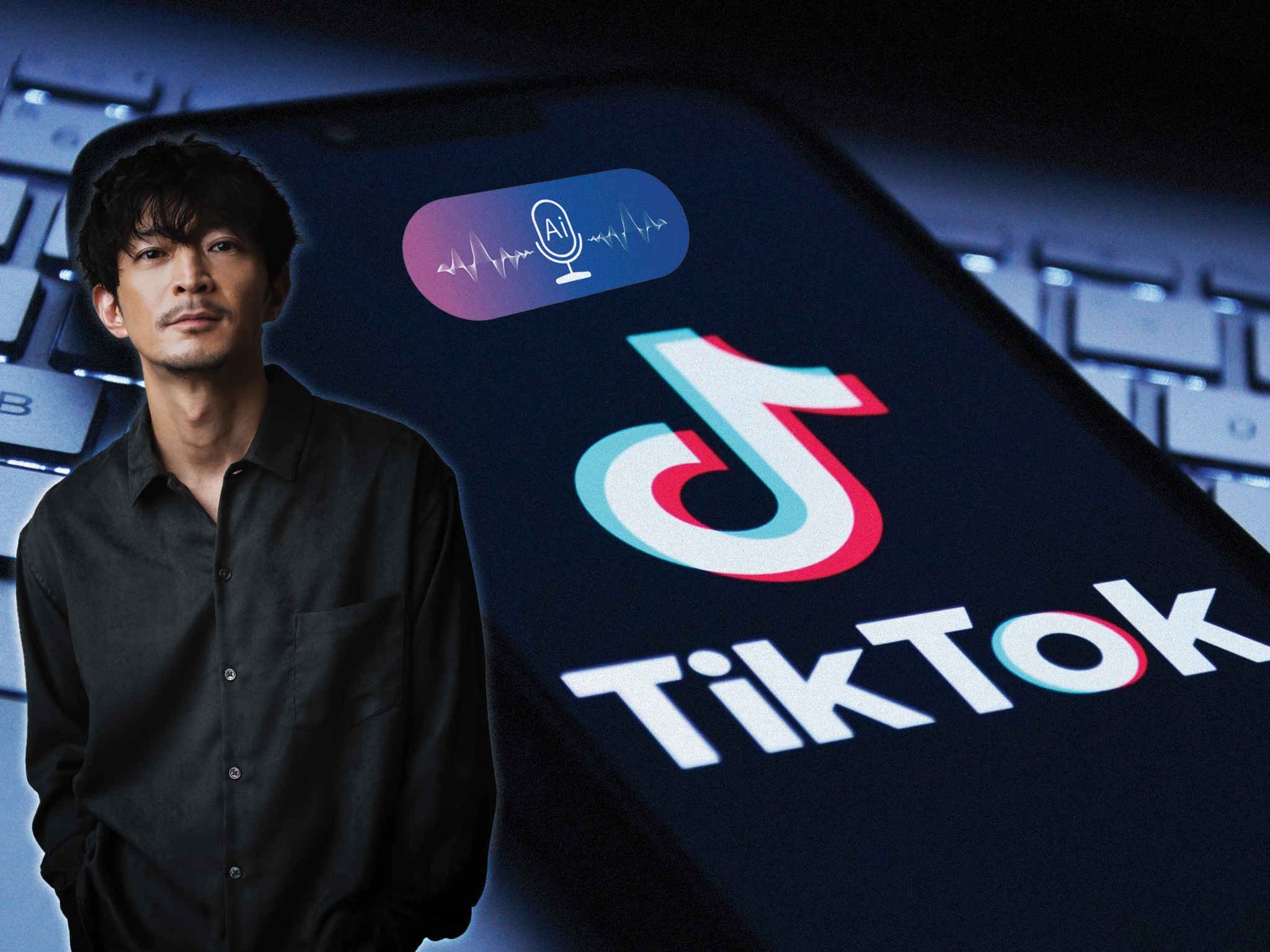
In an era where generative AI can replicate human likeness with a few clicks, the entertainment industry has reached a major legal crossroads. Renowned Japanese voice actor Kenjiro Tsuda — the iconic voice behind beloved characters like Kento Nanami (Jujutsu Kaisen), Seto Kaiba (Yu-Gi-Oh!) and Kishibe (Chainsaw Man) — has taken a definitive stand to protect his craft. Tsuda has filed a groundbreaking lawsuit against TikTok, marking what is believed to be Japan’s very first legal battle against the unauthorized use of a celebrity’s voice cloned by generative AI.
The Lawsuit
The lawsuit, originally filed with the Tokyo District Court, centers around a massive influx of unauthorized content. Legal complaints reveal that between July 2024 and September 2025, an anonymous TikTok account uploaded at least 188 videos focusing on urban legends and trivia. These videos utilized AI-generated narration that heavily mimicked Tsuda’s signature deep, husky vocal tone to attract viewers. Data analysis of the audio, combined with numerous user comments mistaking the AI for Tsuda, underscores the deliberate nature of the clone. Furthermore, this unauthorized use proved highly lucrative, as the account amassed over 210,000 followers and pulled in an estimated ¥500,000 to ¥750,000 per month in ad revenue directly from TikTok’s creator monetization system.
Tsuda’s legal team argues that this exploitation violates his publicity rights — the legal doctrine that grants public figures control over the commercial use of their name, image and identity — as well as Japan’s Unfair Competition Prevention Act. In response, TikTok’s operators have sought a dismissal. They claim the audio is not a clone at all, but rather a generic male voice that lacks a distinct speaking style, arguing that Tsuda’s claims are entirely subjective. With closed-door clarification proceedings already underway, the first formal oral arguments are scheduled to take place in Tokyo.
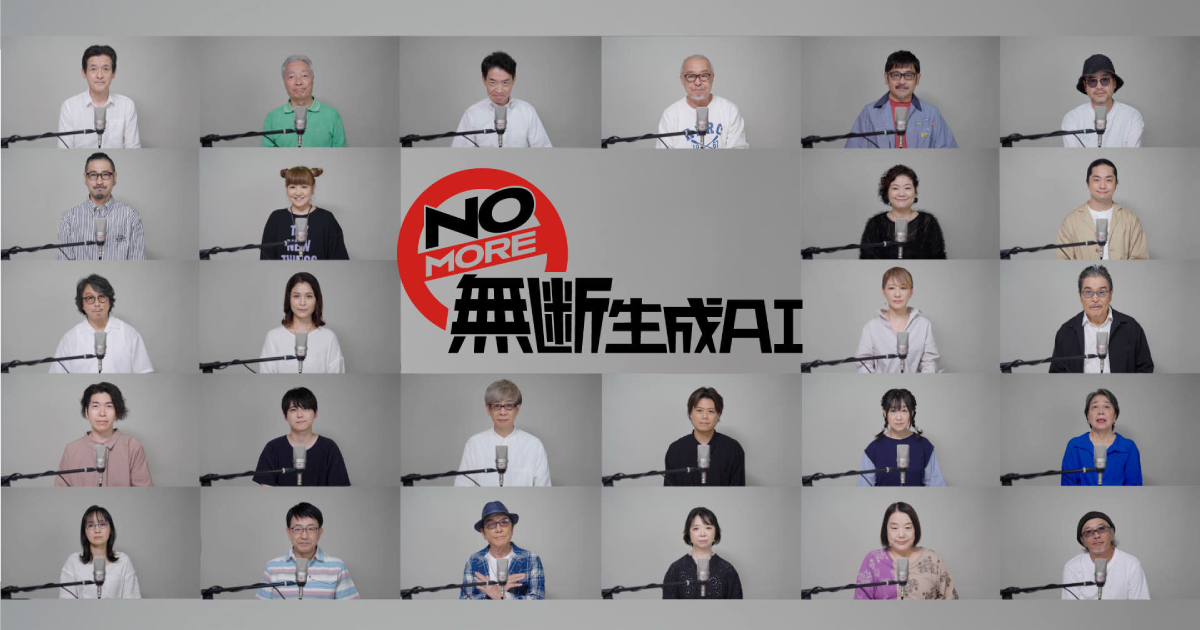
Many voice actors gathered for a campaign against generative AI | Image courtesy of @NOMORE_MUDAN X page
The Bigger Issue: AI and Creative Property
Tsuda’s legal battle highlights a much larger, systemic anxiety felt across the global creative community. When AI clones a voice actor, it strips away an individual’s livelihood and personal brand. Unlike traditional copyright laws, which protect tangible written works, scripts or musical recordings, the human voice itself occupies a legal gray area. Historically, a voice has been viewed as a means of expression rather than a protected copyright artifact. Generative AI exploits this loophole, allowing creators to scrape hours of high-quality anime or movie dubs, train a model and profit off a professional’s years of vocal training without paying royalties.
This lawsuit isn’t happening in a vacuum. It mirrors major global pushbacks, such as Hollywood’s SAG-AFTRA strikes and Scarlett Johansson’s legal clash with OpenAI. When platforms monetize AI clones, they create a landscape where human creators are forced to financially compete against the theft of their own identities. If the Tokyo District Court rules in Tsuda’s favor, it will establish a monumental legal precedent in Japan. It will signal to social media giants that platforms bear a legal responsibility for hosting and subsidizing deepfaked content, and it will formally expand the right of publicity to guard the unique acoustic traits of a person’s voice. The case may turn into a vital fight to determine whether technology will be allowed to take advantage of the very artists who inspired its creation.
Related Posts
Updated On May 26, 2026