
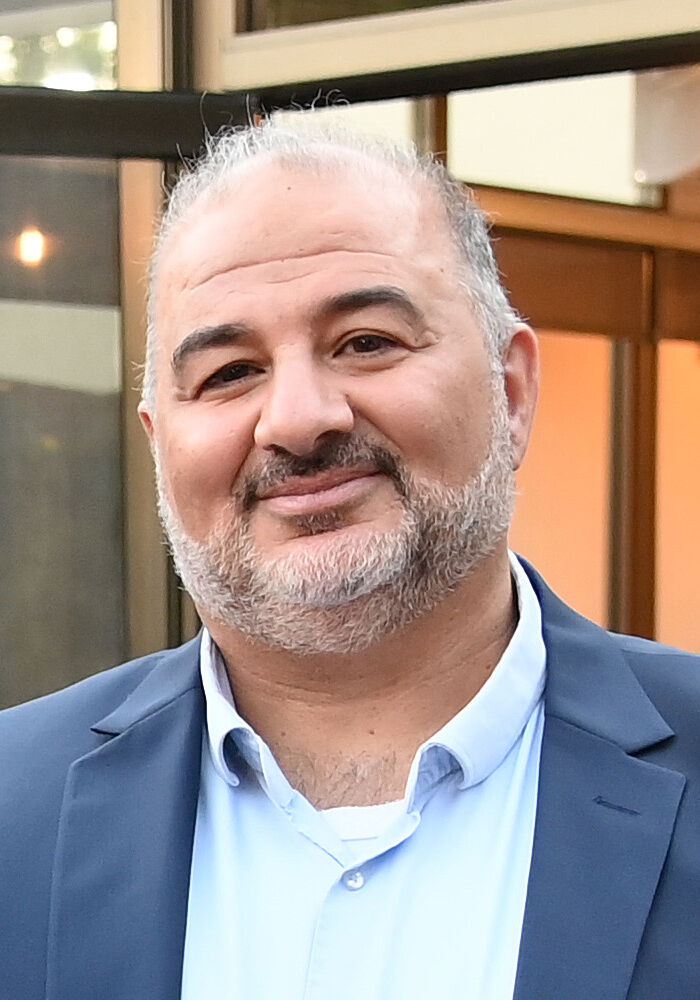
There are many politicians who know how to protest. Far fewer know how to govern.
That is what makes Mansour Abbas one of the most consequential and underappreciated figures in Israeli politics.
As head of Ra’am, an Islamist Arab party rooted in the southern branch of Israel’s Islamic Movement, Abbas has challenged decades of assumptions about the role of Arab citizens in the Jewish state. Rather than treating the Knesset as a platform for symbolic resistance, he has treated it as an instrument for practical change.
His premise is simple: Arab citizens of Israel need safer streets, better housing, stronger schools, improved infrastructure and greater economic opportunity. They face a severe crime crisis, widespread illegal weapons, chronic underinvestment and persistent discrimination. Those problems are not solved through speeches or denunciations. They require budgets, legislation and political leverage.
That insight led Abbas to make history in 2021 when he joined the coalition headed by Naftali Bennett and Yair Lapid. For the first time, an independent Arab party became a formal part of a governing coalition. The move broke a longstanding taboo and helped direct billions of shekels toward Arab municipalities, infrastructure and anti-crime initiatives. It also demonstrated that Arab participation in government could strengthen Israeli democracy rather than destabilize it. As Seth Mandel recently observed in Commentary, Abbas is trying to transform Arab politics from protest into power.
That is why Abbas matters. He is not merely a moderate. He is a political realist.
Abbas understands that Arab citizens are a permanent part of Israel, and that the Jewish state is a permanent reality. Their future depends not on perpetual confrontation but on effective citizenship. His willingness to work with Zionist parties, support voluntary national service and speak openly about civic responsibility reflects a profound shift in
political thinking.
In recent weeks, Abbas has again tested the boundaries of what is politically possible by endorsing voluntary national civil service for Arab youth. The proposal touched a raw nerve. To his supporters, it was an affirmation that citizenship carries responsibilities as well as rights. To his critics, it sounded like accommodation to a state they believe has not earned that loyalty. The backlash forced Abbas to clarify his remarks, underscoring the narrow path he must walk.
But realism has enemies on all sides. Many Arab politicians view Abbas as too conciliatory and accuse him of legitimizing a state they distrust. Many Jewish politicians remain suspicious of his Islamist roots and fear the political cost of partnership. Since the Hamas attacks of Oct. 7, calls for coexistence have faced even greater hostility, as grief, fear and polarization have hardened attitudes throughout Israeli society.
Yet Abbas persists.
His success would demonstrate that Arab citizens can shape Israel from within and that pragmatic cooperation delivers more than permanent opposition. It would offer a model of integration without surrendering identity and of influence without abandoning principle. His failure would suggest that moderation has no future and that coexistence is politically impossible. That would be a profound setback not only for Israeli Arabs, but for Israel itself.
The real significance of Mansour Abbas is that he insists politics should improve the lives of ordinary people. In today’s Middle East, that is not merely pragmatic. It is quietly revolutionary.
Source link ← Back to News