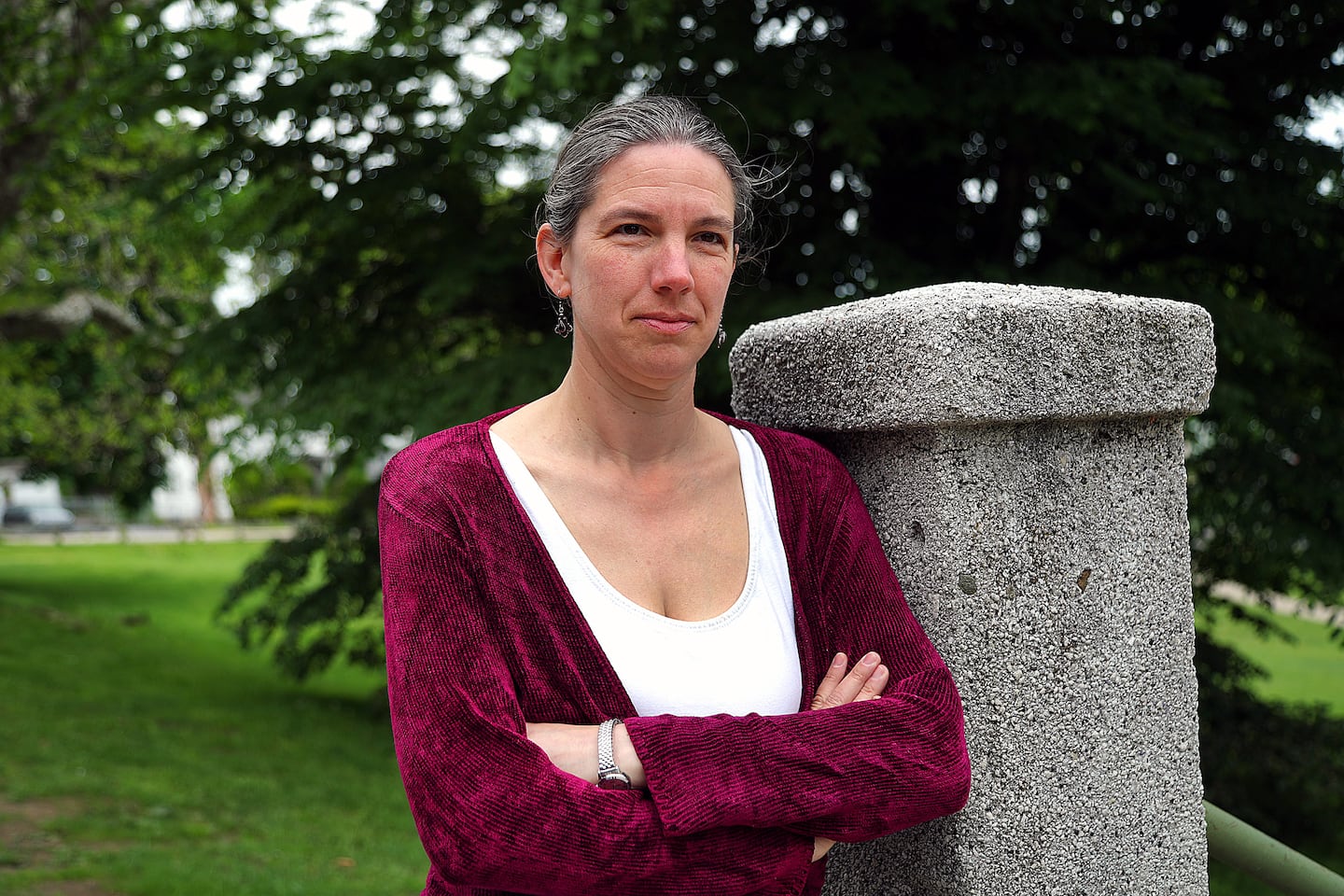
“The trend that we anticipated and worried about has come to bear,” said Health Connector executive director Audrey Morse Gasteier.
Outside an unusual period during the pandemic, nothing in the connector’s history compares to the drop this year, Gasteier said. Nationwide, an estimated 1.2 million fewer people enrolled in the ACA compared to last year.
Cost was the number one reason responders cited for going without insurance, the connector’s survey found. Consumers were faced with a one-two punch: premiums that increased between 7 and 12 percent, and significant changes to the federal subsidies that had allowed so many to buy health insurance on their own. About 60,000 in Massachusetts lost their subsidies entirely this year, and hundreds of thousands more got much less than in previous years.
The survey also found younger and poorer people were more likely to risk going uninsured. About 70 percent of respondents 18 to 25 years old and about 66 percent of respondents living below the federal poverty line reported going without insurance.
“Younger people and lower-income people were among the core constituencies the Commonwealth did the most work to bring into the ranks of coverage,” said Gasteier. “Seeing those populations lose those gains that we’ve worked so hard to make is troubling.”
Also left struggling were many noncitizen immigrants with legal status and incomes below the federal poverty level. About 66 percent of that group surveyed, who are not eligible for full Medicaid coverage, reported being uninsured.
More people without insurance will have consequences throughout the state, health experts and economists said. Young people, for example, tend to be healthier and less likely to make use of health care services, making them cheaper to insure. If more young people are opting out of insurance, the pool of those with policies skews a little less healthy, and the cost of insuring them is likely only going to rise, said Jonathan Gruber, an MIT economist.
Meanwhile, the steady increase in premiums for everyone, driven by high medical and pharmaceutical costs, shows no sign of stopping. Insurance rates in Massachusetts are projected to grow an average of nearly 13 percent in 2027, according to a Department of Insurance evaluation of the merged market rates. The rates for Blue Cross Blue Shield Massachusetts, the state’s largest single insurer with more than 166,000 renewing enrollees, is projected to increase by more than 15 percent.
“It’s hard for me to create a story where those dynamics will go away and trends will come down,” said Mike Guerriere, chief actuary for Blue Cross Blue Shield of Massachusetts. “As long as we’re in this high-trend environment, with all we do to try to mitigate that, I would expect we’re still going to be in a high-premium environment.”
And the health coverage picture is expected to get much worse because of a separate set of changes from Washington, D.C., to the federal-state Medicaid program. New work requirements and eligibility checks that will go into effect in January could result in hundreds of thousands in Massachusetts losing access to Medicaid.
“This is just the start of moving us toward further unraveling of the commitment we’ve had and demonstrated to near universal health insurance and coverage in Massachusetts,” said Kaitlyn Kenney Walsh, chief executive at the Blue Cross Blue Shield of Massachusetts Foundation, an independent policy analysis organization.
The expiration of expanded ACA subsidies for low- and middle-income residents was at the crux of the fight on Capitol Hill last year that led to the longest government shutdown in history. The subsidies were broadened during the Biden administration to include people earning more than 400 percent of the federal poverty level.
During the shutdown, legislators who fought the losing battle to preserve the subsidies argued that allowing them to expire would cost millions their access to insurance.
Since the subsidies expired, many were left performing an impossible calculus: How much could they afford for health coverage without subsidies? And at what point is coverage no longer worth it?

Kelley Kassa, a 56-year-old from Watertown with diabetes, was among those who decided to go without insurance. Last year, her monthly premium for insurance through the connector was $357, with $50 copays for doctor visits.
This year, plans she considered had monthly premiums of $1,000 due to the reduced subsidies. Moreover, she would have been on the hook for $3,800 in out of pocket expenses before the insurance covered any doctor visits, and $10,000 out of pocket before prescription coverage kicked in. Her diabetes medication costs roughly $3,300 annually, she said. She couldn’t afford both the insurance and the medication, she said.
“Do I want to live, because I need this medicine to live, or do I pay my premiums?” Kassa said.
She works for a global industry analysis firm and coaches rowers, but the connector was her best option for health insurance, she said.
“I do not understand how people who make less than six figures can afford health insurance,” she said.
Health authorities in the Trump administration say the decline in enrollment shows the program is filtering out undocumented immigrants and fraudsters.
“The only people who lost coverage were people who were never entitled to coverage,” said Robert F. Kennedy Jr., the secretary of health, in a congressional hearing in April.
But others say it is undisputed that thousands of people depended on those subsidies for access to health coverage.
“There’s certainly not evidence that there’s fraud at anything like this level,” said Gruber, the MIT economist. “The administration’s efforts were designed to take people off health insurance.”
For these families, living without insurance is a blow not just to health care access, but to their finances and sense of stability.
Zoe Sherman, 46, of Boston, turned to the Health Connector in 2025 after leaving her job as a university professor. Deciphering coverage options for herself, her husband, and their teenage child was frustrating, but ultimately fruitful. They qualified for about $600 per month in subsidies, leaving them to pay $1,700 for a Harvard-Pilgrim plan that all of their primary care providers accepted.
Then came the renewal notice.
Because the federal government reduced subsidy options, Sherman would no longer receive financial assistance. The plan they were on in 2025 was also upping its premium. The family would have to pay $3,000 per month if they renewed the same coverage.
Sherman found another plan on the marketplace that cost about the same as the family paid in 2025 but came with far fewer benefits. The household deductible reached $5,800 and the out of pocket maximum was more than $20,000.
The plan also wasn’t accepted by their child’s pediatrician. But their teenager soon turns 18 and can get an adult primary care provider.
“We figured it was a compromise we could make,” Sherman said.
As for next year, Sherman said she doesn’t know what the family will do, but expects they would almost certainly continue to pay for insurance through the marketplace.
“But I don’t know how extreme and absurd the prices could be,” Sherman said. “Maybe there is a threshold past which we just can’t do it. I’m not sure.”
Marin Wolf can be reached at [email protected]. Jason Laughlin can be reached at [email protected]. Follow him @jasmlaughlin.
Source link ← Back to News