Black Americans continue to face health disparities across virtually every major indicator because of systems that have historically and systematically denied Black communities access to the conditions that produce good health. The Council on Black Health has spent years building the evidence, relationships, and infrastructure needed to move improving Black health from conversations to action. The release of the Collective Action Plan comes at a moment when urgency is undeniable. The Supreme Court’s recent decision in Louisiana v. Callais, which threatens to limit the political representation Black communities rely on to shape health policy, is a stark reminder that the systems producing health inequities do not fix themselves.
We cannot continue to rely on conversations and good intentions. This moment requires action, which is why the Council on Black Health Collective Action Plan was developed and refined with 75 health leaders across the United States.
“We have never had a shortage of passionate or talented people and organizations working to improve conditions for the most impacted communities. What we have had is limited coordination in our actions. The Collective Action Plan is the Council on Black Health’s opportunity to use a shared roadmap, built by people already doing the work to create space for us to move together,” said Dr. Melicia Whitt-Glover, Chief Executive Officer of the Council on Black Health.
CBH’s work is organized across three integrated domains: Research, Policy, and Practice. Rather than being siloed activities, these domains are mutually reinforcing engines of change. The organization serves as a weaver of this collective effort, holding the threads together, ensuring that individually strong organizations work in ways that reinforce rather than duplicate each other and build the connective tissue the public health field needs to move from parallel effort to coordinated change.
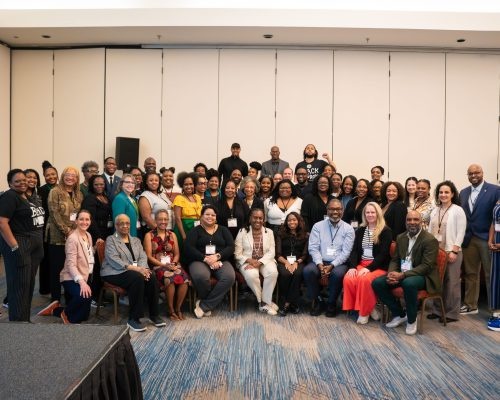
CBH began developing the Collective Action Plan in March 2026 in Houston with 75 health leaders across the country during a workshop where they reimagined what Black health could look like if we moved beyond conversations and towards structured facilitation, cross-sector collaboration, and real-time problem-solving to co-create practical solutions to the root causes of Black health inequities.
What emerged is the Collective Action Plan, which includes 13 strategies and 50+ tactics that address food access, healthcare delivery, mobile health clinics, and community solutions, to be executed through 2028 to meet key targets, which include:
- Adopting an AI ethics framework across partner organizations
- Advancing at least two policy priorities at the federal and state levels
- Developing a Mobile Health Clinic playbook that will be adopted by at least three organizations
“The Collective Action Plan connects our work in food access and youth development to a nationally coordinated action. We feel genuinely seen as part of a mission we can pursue alongside real thought partners,” said Amanda Storey, Executive Director of Jones Valley Teaching Farm.
For immediate access to the Collective Action Plan, journalists and partners can download the document directly. It is also available on CBH’s website.
###
About The Council on Black Health
The Council on Black Health (CBH) is a national network of researchers, practitioners, community leaders, and advocates united around a single mission: achieving optimal health for Black people and communities. We work at the intersection of research, policy, and practice, connecting evidence to action and action to community power. For more information, visit councilbh.org.
Source: The Council on Black Health (CBH)