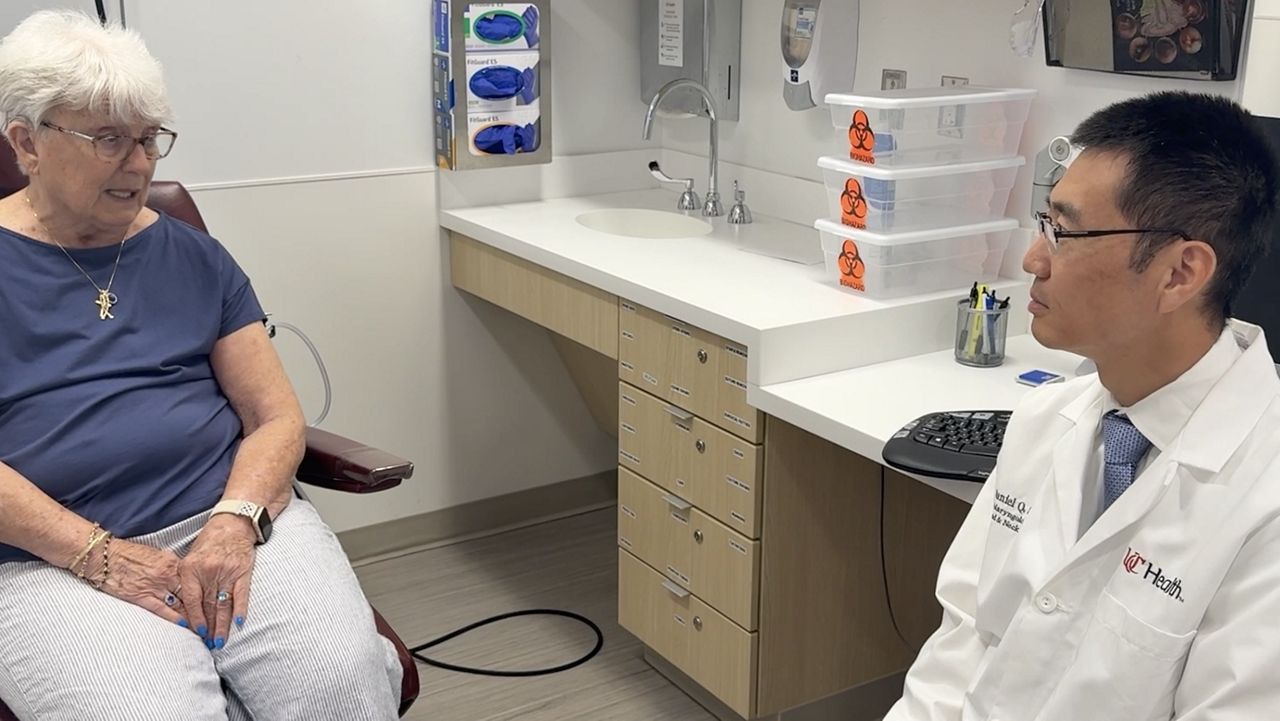
CINCINNATI — Experts say when the brain struggles to process sound, it can accelerate changes in memory and thinking. The good news is interventions like cochlear implants may help patients not only hear better but potentially protect brain health.
Hearing loss and forgetfulness can be considered a typical part of aging, but one can actually make the other worse. One woman who has been dealing with hearing loss said, through the support of friends and family, she has been able to overcome many hurdles.
“Without hearing you are isolated,” Cochlear implant recipient Cheryl McKee said.
McKee, 80, lost her hearing after multiple surgeries that turned her world upside down.
“I lost my hearing in my right ear because of brain surgeries,” she said. “I’ve had five.”
She said she didn’t hear out of her right ear for 30 years.
According to the state public health data, more than 200,000 Ohioans age 65 and older live with Alzheimer’s disease. Health care professionals believe new improvements to hearing aids in recent years can help manage the problem.
“Options that have become available in terms of helping people with hearing loss, such as improvements in hearing aid technologies or over the counter hearing aids, so that they’re more accessible,” UC Health Dr. Daniel Sun said.
Sun said hearing loss could mean something bigger.
“Hearing loss is now the number one modifiable risk factor for dementia, according to the World Health Organization,” Sun said.
However, McKee is grateful her recent implants for her ears have helped, but it’s been a challenge to reteach herself how to hear.
“You have the implant, and they don’t activate it for a couple weeks so that you can heal, and then when they activate it you don’t really hear much at all,” she said. “You have to train your brain to hear again.”
She credits her friend, family and faith that keeps her moving forward to not to give up.
“My faith is very, very crucial in my existence,” she said.