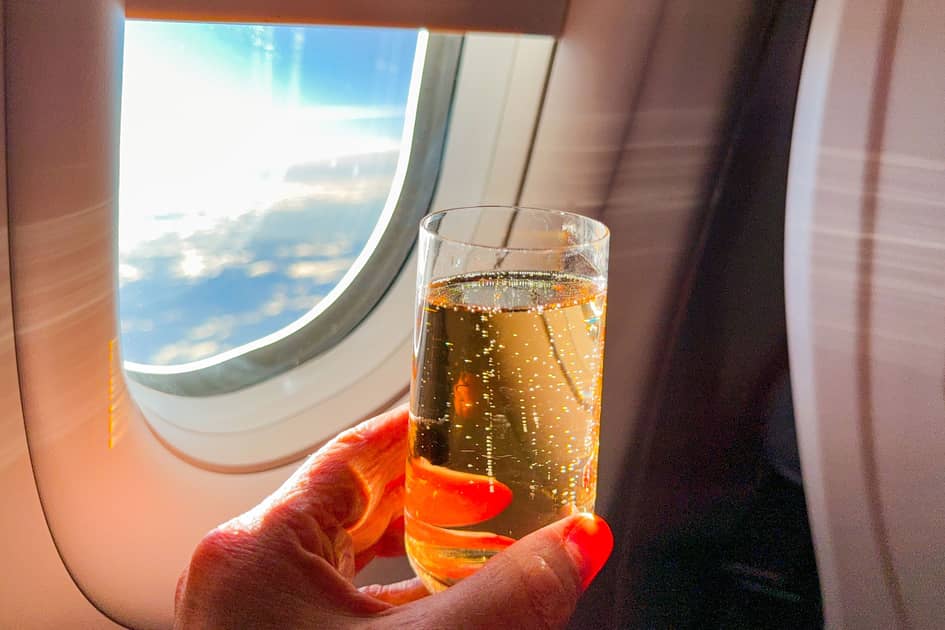
If you’re wealthy, it’s a new golden age of travel. If you’re not wealthy, it’s gold-plated at best. Airlines and hotels are increasingly tailoring their services to the affluent, while everyone else fights for legroom and late checkouts—if they can afford the trip at all.
First-class operation: The growing delta between high-income and low-income travelers might be easiest to notice in…Delta. The airline, like American and United, has been directing resources toward its premium products, and the strategy is paying off. According to CNN:
- Sales of Delta’s main cabin seats dropped 7% in 2025, year over year.
- But business and first-class ticket sales rose 9%.
In fact, the airline’s premium ticket sales surpassed economy sales for the first time ever last year.
In the meantime, fares for everyone keep getting more expensive, due, in part, to the Iran war and higher fuel prices. That’s made it harder for low-cost airlines to stay in the black, since many of their customers are getting priced out. Earlier this month, Spirit, the poster child of budget flying, abruptly shut down, specifically citing fuel costs.
Suite dreams. A similar K-shaped trend is playing out in the hotel industry. According to JLL Research, from November 2024 to November 2025:
- Luxury hotels saw a 2.9% gain in revenue per available room.
- Midscale properties dropped 2.6%.
- Economy hotels dropped 4.1%.
People are still traveling, though
Two-thirds of Americans plan to take a domestic trip or two this summer, according to US News. They’re simply leaning on perks like frequent flyer miles and hotel points, or spending their lunch breaks hitting refresh on deal sites.
Trading places: A lot of travelers are turning to “destination dupes,” which offer experiences similar to famous tourist hot spots, but for much cheaper. So, instead of Paris and Rome, people are checking out Brussels, Belgium, and Naples, Italy. And instead of Boston, people are probably just going to Dunkin’.—BC