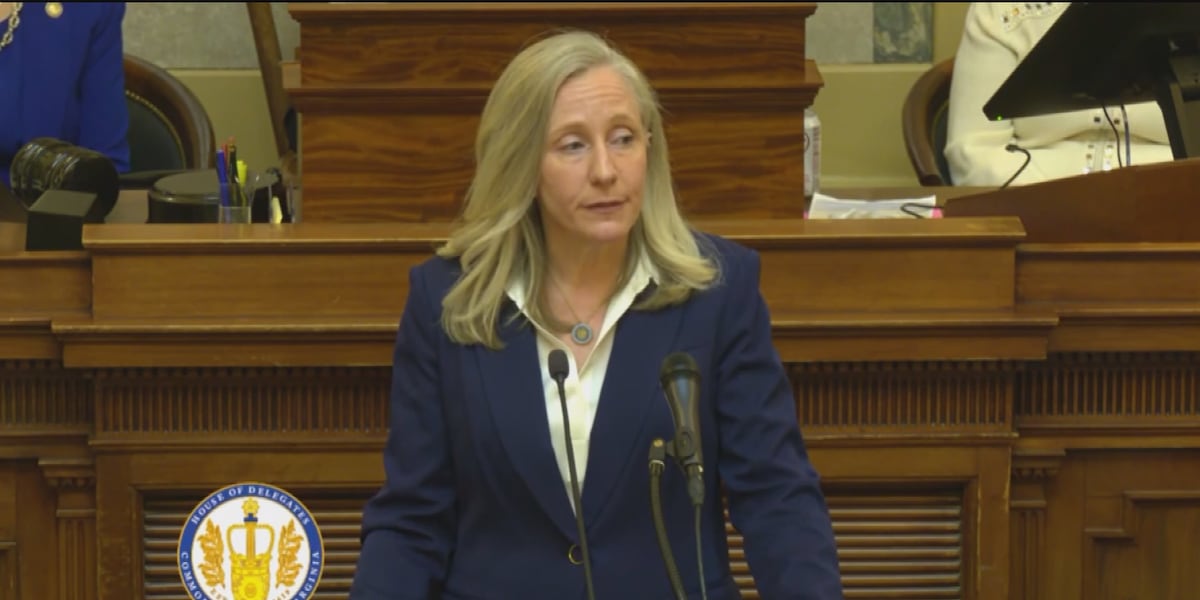
RICHMOND, Va. (WDBJ) – Virginia Governor Abigail Spanberger vetoed a number of bills passed by her own party in the General Assembly this week. They included a bill that would have created a retail marijuana market in Virginia.
Virginia Tech political expert Dr. Cayce Myers said the vetoes show a power struggle between the governor and Democratic leaders in the General Assembly. He said it will likely change how the legislature approaches things in the rest of Spanberger’s term.
“Spanberger is not a product of state politics. She has been in Congress. And so this could be a “getting to know one another” type of situation. It could be a situation where, as years go on, that relationship changes. Certainly it is going to change, just given the fact that she’s willing to veto so much,” Myers said.
Myers said the situation is unusual because typically when one party controls both the executive and legislative branches, there is more agreement on priorities.
“When Youngkin was governor, he vetoed a lot. But that was not unusual because he had a Democratic legislature and he’s a Republican. This is a more unusual situation because typically where you have one party control, there’s more of a lockstep agreement between the executive and the legislative branch about priorities,” Myers said.
Spanberger’s veto of the bill that would set up a retail marijuana market has been the biggest surprise for members of her party. Democrats have been pushing to launch a retail market since the drug was first legalized in the state in 2021.
Former Republican Governor Glenn Youngkin vetoed several attempts by Democrats to launch a retail market during his term.
Spanberger said shortly before she took office that she would support a retail marijuana market provided it had strong labeling and regulation.
“The consumer should always know what they are buying. So that means strong labeling, which means understanding the strength. If you go buy a pack of beer, you know what percentage alcohol that beer is. So it needs to be well regulated and well labeled,” Spanberger said in an interview with WDBJ7 in late December.
The marijuana bill passed by Democrats in the General Assembly would have launched the state’s retail market on Jan. 1, 2027. It would have increased the amount of marijuana adults over 21 can legally possess to 2.5 ounces and given out 350 business licenses for dispensaries around the state.
Spanberger sent back an amended version of that bill that would have pushed the start date back six months, decreased the possession number to 2 ounces and decreased the number of licenses to 200. It would have also raised the proposed tax rate on cannabis products from 6 to 8 percent.
The General Assembly rejected those changes. Spanberger then vetoed the bill outright.
In a statement on her veto, Spanberger said she remains committed to establishing a safe and well-regulated retail marijuana market but indicated it needs stricter regulation than what was in the bill.
“I share the General Assembly’s goal of establishing a safe, legal, and well-regulated cannabis retail marketplace in the Commonwealth. Virginians deserve a system that replaces the illicit cannabis market with one that prioritizes our children’s health and safety, public safety, product integrity, and accountability. As Virginia pursues a legal retail market, it is critical that we incorporate lessons learned by other states and ensure that our regulatory framework is fully prepared to provide strong oversight from day one. That includes clear enforcement authority and sufficient resources for compliance, testing, and inspections, and robust tools to crack down on bad actors who continue to profit from the illicit market. I greatly appreciate the patrons’ time crafting this important piece of legislation as well as our continued dialogue and collaboration to strengthen this framework ahead of the next legislative session. I remain committed to working with members of the General Assembly, stakeholders, and law enforcement to get this right,” Spanberger said.
“What she seemed to have done is say, I support this in context and theory in terms of just the overall philosophy, but I don’t support the details of how you’re going to effectuate these policies,” Myers said.
Myers said Spanberger appears to be very focused on the details of legislation.
“She seems to be very concerned around details. And if you look at some of these statements, she talks a lot about details and the details of these bills and how things are going to be impacted and just sort of the practicality of it,” Myers said.
Myers said the vetoes have immediate implications for the state budget.
“The most immediate impact here is the budget and the conversations around the budget. And some of these vetoes also impact the budget and revenue and about how some of these initiatives are going to be paid for,” Myers said.
Myers said the marijuana issue is tied to larger questions about state budgets and revenue.
“This is something that’s not some isolated single issue, but it has threads that go through many, many different aspects of state budgets and revenue and just governance,” Myers said.
Myers said the vetoes could have some impact on Democrats in local and congressional elections in Virginia in November.
“One of the issues that it does raise is how effective are you as a party to get your initiatives through? And that could not necessarily sour people on candidates, but it could end up making people less enthusiastic in terms of their own turnout,” Myers said.
Myers said turnout is critical in off-year elections.
“We know turnout is very important in some of these off-year elections. And so you certainly could envision a situation where people say, ‘well, you know, this was something that they promised, but they weren’t able to deliver.’ And they’re less enthusiastic, writ large, about going and voting,” Myers said.
Myers said he expects Democrats to again pass a retail marijuana bill in next year’s General Assembly. He said Democrat legislators will likely have to be more accommodating to Spanberger’s demands now that she’s shown a willingness to break from her own party.
“They have to operate in the reality, the political reality that they live in. And they have a governor who has signaled her desires in terms of the details of this type of issue. And this sort of this type of law. And so I think what they have to do is they have to work within that reality and understand that this is someone that is a little bit more proactive in their own review of these laws that maybe they’ve expected,” Myers said.
Delegates Sam Rasoul and Lily Franklin, the only Democrat legislators from our region who both supported the marijuana bill and other bills Spanberger vetoed, did not respond to requests for comment.
Delegates need to return to vote on a state budget by July 1.
Copyright 2026 WDBJ. All rights reserved.