Chicago’s top federal prosecutor announced the permanent dismissal Thursday of charges against the remaining members of the “Broadview Six” in a stunning hearing that revealed apparent misconduct by his staff before a grand jury during Operation Midway Blitz.
In a rare courtroom appearance, U.S. Attorney Andrew Boutros told U.S. District Judge April Perry he’d learned of what happened three weeks ago. He said he didn’t believe any member of his staff had intentionally misled the judge.
Then, he went on to say the conduct of six protesters who opposed the Trump administration’s deportation campaign was “unacceptable in a civilized society” — even though he’d officially just abandoned any effort to find them guilty of a crime beyond a reasonable doubt.
Perry told him, “you are significantly undercutting your mea culpa here by standing behind the charges and continuing to vilify these particular defendants.” She said there might be talk of sanctions for prosecutors down the road.
And that’s how the prosecution of the “Broadview Six” came to an end — with jaw-dropping revelations, days before a trial, that could haunt Chicago’s U.S. Attorney’s office for years.
The office’s mantra is “Do the Right Thing,” and it has long been considered one of the most well-regarded of its kind in the country.

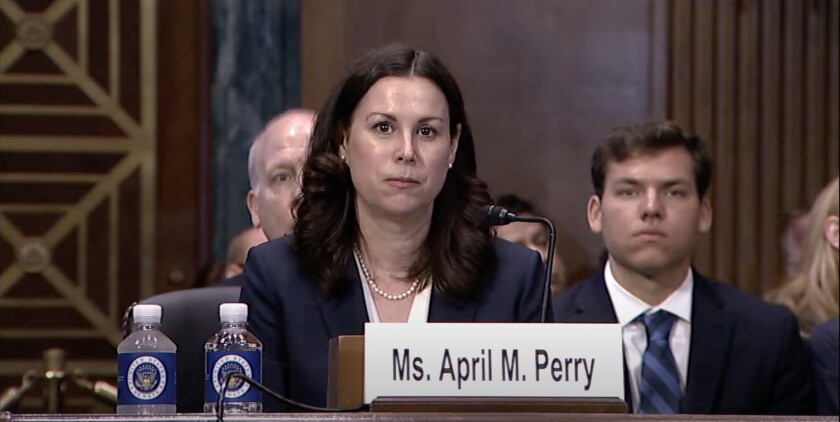
Perry served in the office and was even once tapped to lead it. But Thursday, she told attorneys she was “incredibly shocked” by what she saw in a set of grand jury transcripts.
“I have never seen the types of prosecutorial behavior before a grand jury that I saw in those transcripts,” Perry said.
Worst of all, she said, the problematic behavior had been redacted out of transcripts given to her by the feds.
“Mistakes happen,” Perry said. “They happen to all of us. But as I tell my children, you own it. You admit to it. You apologize for it, and you move on.
“What you do not do is hide it.”
The judge said she believes “deeply in the presumption of regularity” — a legal principle that assumes federal officers are acting in good faith. But, she said, “that trust has been broken.”
Defense attorneys called the alleged misconduct “unheard of.” They said it was “warped” and “gross.” They also say it led to a “cover up.” Two former federal prosecutors on the defense team, Christopher Parente and Nancy DePodesta, seemed visibly angry while speaking to reporters in the lobby of the Dirksen Federal Courthouse.
Parente said “I have never even heard of something as bad as what took place in this grand jury session.” And DePodesta said “it was absolutely sickening to me to listen to Judge Perry describe what went on.”
They said they’d be pursuing sanctions based on prosecutorial misconduct — and that their clients would apply to President Donald Trump’s new fund for people who believe the Justice Department has been weaponized against them.
Most of them are involved in local Democratic politics.
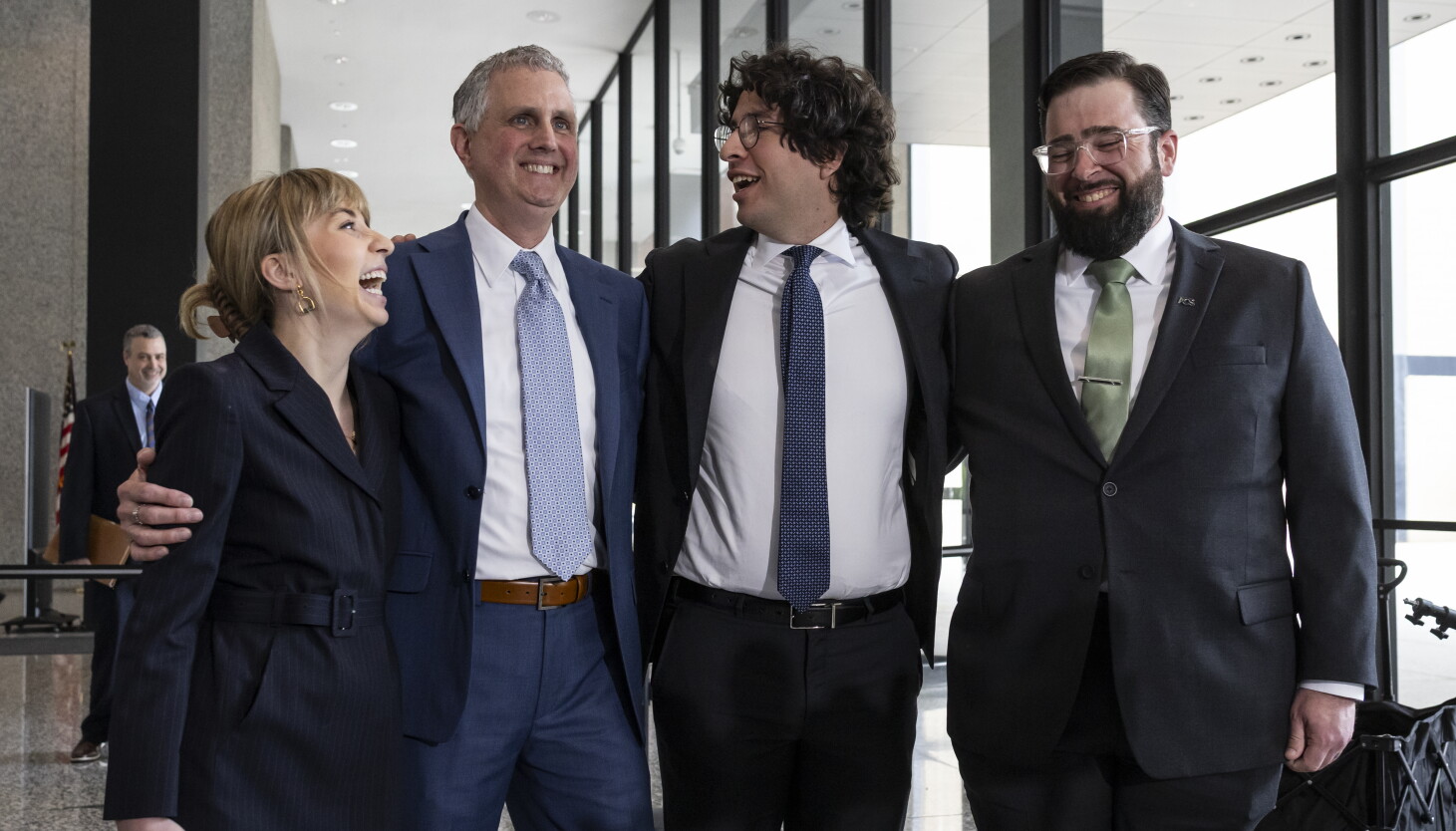
But first, the defendants celebrated the end of a seven-month ordeal that began in late October, with a grand jury indictment accusing them of a conspiracy to impede a federal agent. They each faced a maximum sentence of seven years behind bars.

One of them, former congressional candidate Kat Abughazaleh, cried out in the courtroom when she heard Boutros confirm the charges would be dismissed with prejudice, meaning they can’t be re-filed.
Also charged in the original indictment were Oak Park village trustee Brian Straw, then-Cook County Board candidate Catherine “Cat” Sharp, 45th Ward Democratic committeeperson Michael Rabbitt, musician Joselyn Walsh and Abughazaleh campaign worker Andre Martin.
Charges were dropped against Sharp and Walsh in March.
They’d been accused of joining a larger group of protesters who surrounded a U.S. Immigration and Customs Enforcement agent’s vehicle and pushed, scratched and otherwise damaged it as it approached a federal facility in Broadview.
Straw said the court battle was “about our collective First Amendment rights.” Martin’s attorneys said “truth and justice prevailed.” Abughazaleh’s attorneys called the prosecution “misguided” and said they were “extremely happy for Kat to have the weight of this unjust prosecution off her back.”
On the social media site Bluesky, Abughazaleh wrote that it was “time to drink an entire bottle of champagne!!!”
The case was among the most high-profile and controversial brought during the Midway Blitz deportation campaign. With Thursday’s dismissals, 24 of 33 people charged with federal nonimmigration crimes tied to the campaign have been cleared. Four others have struck deals to have their cases eventually dismissed. Two people have pleaded guilty.
In an interview last month with the Chicago Sun-Times and Chicago Tribune, Boutros said “[there is ] not a single case, OK, involving politics in our decision-making. Full stop. Period. Zero. And anyone who says otherwise is misstating reality. And anyone who says otherwise is an armchair expert who doesn’t know what they’re talking about. Period.”
Boutros’ office declined to comment Thursday beyond his remarks to Perry.
Then-Attorney General Pam Bondi temporarily appointed Boutros to his job in April 2025. But when her appointment expired last summer, Chicago’s federal judges chose Boutros to serve on a more permanent basis.
U.S. District Chief Judge Virginia Kendall declined to comment on Thursday’s events. A spokesman cited the judicial code of conduct prohibiting comments on “the merits of a matter pending or impending in any court.”
Boutros told Perry in court that he’d met with Kendall and established “office-wide guidance” to prevent some of what happened in the “Broadview Six” case from happening again.
Grand juries are meant to be a check against overzealous prosecutors. They are generally made up of 16 to 23 people who meet in secret and hear only from prosecutors and their witnesses. Twelve members of the panel must concur to hand up an indictment.
Perry flagged three problematic events in the grand jury. First, she said there was “vouching,” in which a prosecutor improperly put “her personal credibility and trustworthiness on the line in support of the charges,” according to the judge.
Second, Perry said a prosecutor crossed a line by having “substantive” communications with grand jurors outside of the grand jury room.
The judge said a prosecutor also excused grand jurors “who disagreed with the government’s case from the deliberations process.”
Finally, it turns out the case had once been rejected by grand jurors, a result known as a “no bill.” Three other Midway Blitz defendants were cleared last fall because of grand jury “no bills” — which were once considered an incredibly rare rebuke of prosecutors.
However, defense attorneys say the misconduct didn’t stop there. Boutros said he learned what happened in late April, when he said he made the decision to abandon the grand jury’s indictment and pursue misdemeanors through a separate charging document.
Boutros’ office moved forward toward trial, even as defense attorneys raised questions about the grand jury proceedings. They allowed Perry to speculate as recently as Monday that redacted portions of transcripts from the proceedings were simply related to “IT issues.”
Meanwhile, 90 potential jurors were expected to arrive Tuesday to possibly hear the case.
The assistant U.S. attorneys involved in the case were Sheri Mecklenburg, William Hogan, Matthew Skiba and Andres Almendarez. Mecklenburg served as the lead prosecutor when the case was indicted, but she left to serve as counsel to the Senate Judiciary Committee.
Courtroom commentary Thursday indicated Skiba and Mecklenburg appeared before the grand jury, with Skiba as the junior prosecutor who had just joined the office in July.
Hogan filed his appearance in the case in February, roughly three months after the indictment. But he’s no stranger to such controversies. Claims of misdeeds during the prosecution of El Rukn street gang cases in the 1980s and 1990s led to Hogan’s firing in 1996.
He was rehired after an administrative judge cleared him of wrongdoing, according to previous reports in the Chicago Sun-Times.
Details about what happened in the grand jury were first revealed during a closed-door hearing in Perry’s courtroom Thursday morning — before Boutros announced the end of the case.
Perry later ordered that a transcript of that proceeding be unsealed. It was released around 6 p.m., revealing specific details of what occurred.
The hearing was the result of a lengthy effort by defense attorneys in the case to pierce the secrecy of the grand jury. Specifically, they wanted to know how the conspiracy law had been explained to the panel. Alternatively, they suggested Perry take a look.
The judge agreed to do so, and prosecutors filed the transcripts with the judge. But they apparently gave her a redacted version. Not only that, but it turned out pages were missing from the transcript, according to Parente.
Perry called a hearing April 29 and told the feds to bring unredacted copies of the transcripts. However, moments into that hearing, Hogan said the indictment was being abandoned. Perry agreed that made the defense request “moot” — meaning there was no reason to read the unredacted transcript.
Defense attorneys continued to press, and Perry finally agreed on Monday to look again.