Last year, clean energy attracted double the investment of fossil fuels. It’s now a multi-trillion dollar industry globally, and the dominant source of new capacity in the US.
And yet in the 2024 election cycle, the entire renewable energy industry donated just $2.5 million to political campaigns. The oil and gas industry donated $75 million just to elect one man.
Now consider crypto. A few years ago, most politicians treated it as a fringe technology at best. And then the crypto industry decided it was done being ignored and attacked. It built a war chest and spent hundreds of millions of dollars in 2024, representing nearly half of all corporate political spending that cycle.
As a result, crypto went from regulatory target to political kingmaker in a single election cycle.
Clean energy has been a legitimate economic force for over a decade and still gets pushed around Washington. Why? How does an industry that’s winning on economics keep losing in politics?
This week, we’re live from the Prelude Climate Summit, a gathering of the top investors and companies in climate tech.
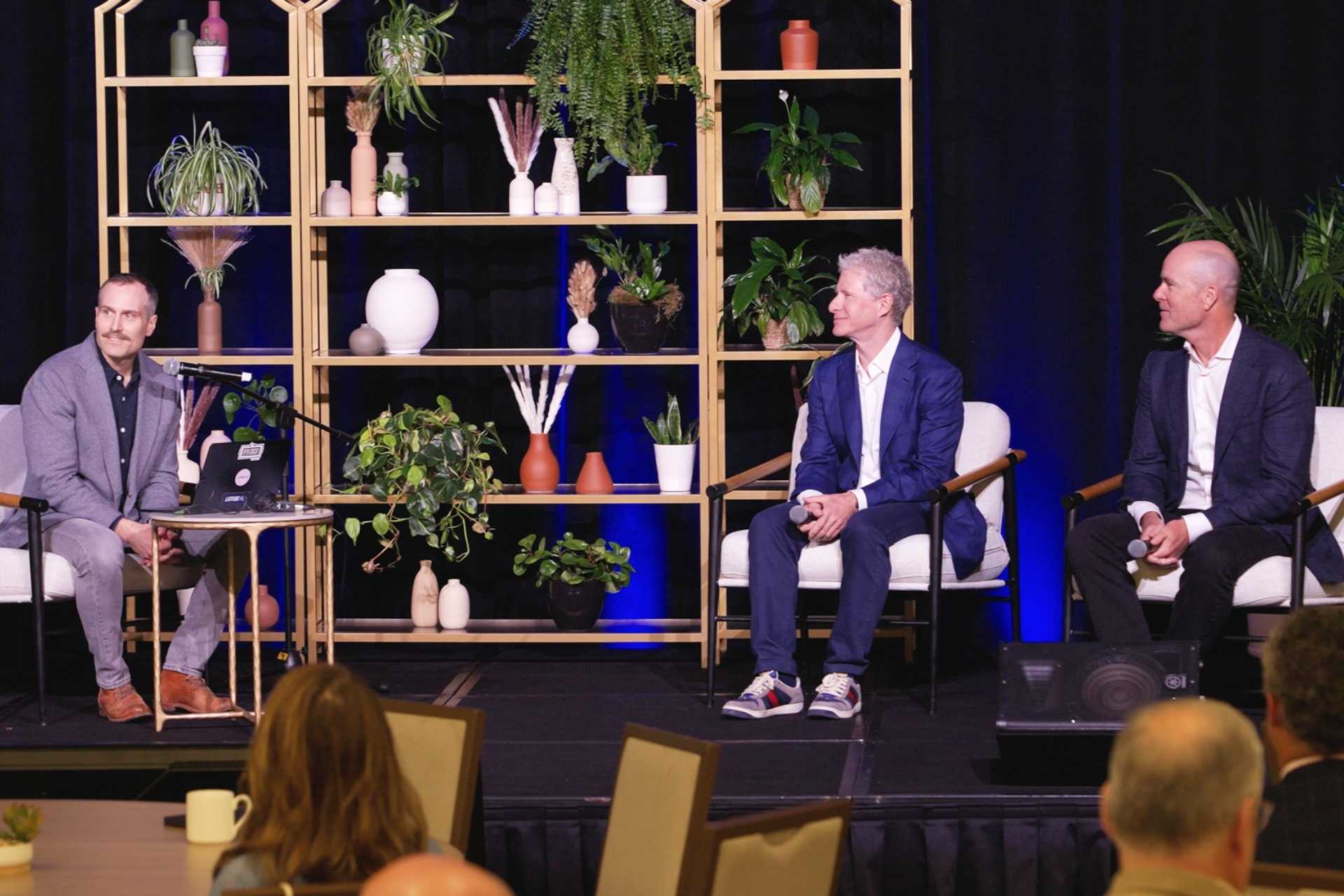
Stephen Lacey is joined by Chris Larsen, the billionaire co-founder of Ripple, who helped engineer crypto’s political transformation. He is now deploying that same playbook in service of climate. He’s also joined by Mike Brune, the longest-serving executive director in the Sierra Club’s history, who stepped away in 2021 to co-found the Clean Break Fund with Chris — a new climate investment and political initiative.
We get into bare knuckle politics, lessons from the crypto industry, when and how we should talk about climate in politics, and the way AI is influencing the conversation.
Open Circuit is produced and edited by Stephen Lacey, Sean Marquand, and Anne Bailey.
Open Circuit is brought to you by FlexGen, a leader in integrated battery energy storage solutions and energy management software. FlexGen helps owners and operators gain greater visibility and control across complex energy systems to maximize performance. Learn more at www.flexgen.com.
Tune into Critical Capital, a brand new podcast from Crux and Latitude Studios. Hosted by Crux CEO Alfred Johnson, Critical Capital explores the interlocking forces powering clean and critical infrastructure. Join us every other Tuesday for in-depth conversations at the intersection of energy, government, finance, and global markets. Listen here, or wherever you get podcasts.
Transcript
Stephen Lacey: From Latitude Media, this is Open Circuit. Last year, clean energy attracted double the investment of fossil fuels. It is now a multi-trillion dollar industry in the dominant source of new capacity in the US. And yet in the 2024 election cycle, the entire industry donated just $2.5 million to political campaigns. The oil and gas industry spent $75 million to elect one man.
Now consider crypto. A few years ago, most politicians treated it like a fringe technology at best, and then the crypto industry decided it was done being ignored and attacked. It built a war chest, it spent hundreds of millions of dollars in 2024, nearly half of all corporate political spending that cycle, and it went from regulatory target to political kingmaker in one election cycle. Clean energy has been a legitimate economic force for over a decade and still gets pushed around Washington. Why is that? This week we’re going to find out if what worked for crypto can work for clean energy and climate tech.
I am Stephen Lacey, executive editor of Latitude Media. A few episodes back, you heard Jigar talking about a campaign that he supported to take out Chip Roy, a Texas congressman who came after the clean energy industry. And we touched on this question of what building power means in this current political environment. Well, this episode we’re leaning into that question. I was at the Prelude Climate Summit in California this week. It’s a Chatham House event that brings together the top investors and companies in the climate tech space, where they have candid conversations about the state of the industry. Full disclosure: Prelude Ventures is an investor in Latitude Media.
And each year, they let us plug in our recorders and cameras, break those Chatham House rules, in order to capture the candor from the conference for the people outside the room. And this year, I took the stage with two people who are leaning into this idea of building the kind of political power that the oil & gas industry – and now the crypto industry – has built. I was joined by Chris Larsen, a highly successful crypto entrepreneur, and now a billionaire who is highly active in politics and climate initiatives. And Mike Brune, the former executive director of the Sierra Club, who now runs a fund alongside Chris.
They directly challenge the consensus-based approach that climate groups and the climate tech industry have historically taken in Washington. We get into bare knuckle politics, lessons from the crypto industry, when and how we should talk about climate in politics, and the way AI is influencing the conversation. This one sparked a lot of dialogue afterward, so if you have thoughts, share them with me on Linkedin or X. So let’s get into it.
Chris Larsen is the co-founder and executive chairman at Ripple. His pioneering work in blockchain based financial transactions made him many billions of dollars and he has been increasingly wielding that money in service of climate solutions. And Chris, it is great to see you. Thanks for being here.
Chris Larsen: Thanks for having us.
Stephen Lacey: And Michael Brune is the former executive director at the Sierra Club, the longest serving in the organization’s history. He stepped away in 2021 and he co-founded the Clean Break Fund with Chris, a new climate investment and political initiative that is explicitly trying to do things differently. Mike, welcome. How you doing?
Michael Brune: Thanks, Stephen. Good to be here.
Stephen Lacey: Okay, so let’s start with what you are doing differently. On the website, you guys say right at the top, you’re creating a clean break from ideas that don’t work. So let me put you on the spot. What are the ideas that are not working in the climate movement and how are you different, Chris?
Chris Larsen: Well, a couple of things and tons of respect for what everybody in this room has done, but we have to admit, I think we’re sort of failing in this climate fight. And one of the things I think we’ve failed at is that look, climate cannot be a one party thing. We’ve got to reach out across to our Republican friends and stop vilifying them, talking down to them and just saying that, “Hey, they just don’t get it. They’re not getting what’s obvious.” So we’ve got to build those coalitions. And so we’re putting a lot of resources into groups like ClearPath, the Evangelical Environmental Network that’s kind of using religious thinking around getting more involved in climate. American Conservation Coalition is another group that we support and that’s going to be really, really important. And sort of the way I’m thinking about it now is, look, we really have four parties in America, right?
On the Democratic side, you’ve got the lefties, you’ve got the mods on the Republican side, maybe the neocons and the MAGAs. There is a lot of room there to work of broadening our coalition, right? But I think what we know is not going to work, like are we even using ESG anymore? I mean, obviously that was a total failure. We tried to load up the environmental stuff with a bunch of social and governance work that was like, it was every Republican’s kind of worst nightmare about what was going on here, that climate was a Trojan horse to bring in all these lefty ideas and we have to stop doing that. I even think we have to stop talking about equity and sustainability. You’re just burdening the cause here unnecessarily and it’s getting in the way of building coalitions. So what we really love about the issues out there today are things like the insurance crisis.
We all know there’s an insurance crisis. Obviously it’s created by too much carbon in the air, too much heating, extreme weather, raises our insurance costs and our risk. And what does that do? It drives up every American’s basic cost of housing. You’re either paying way too much or you can’t get insurance, which means housing is unaffordable because you can’t buy a house unless you’re a cash buyer. So that one is really simple. That one gets all four of those groups interested because it’s about cost, cost, cost. And it’s sort of the climate cost crisis. That’s all that matters here. And so we like things like that. And again, why did IRA go away? It’s because it only had two of those groups, right? The lefties and the mods, we didn’t have enough support on the other side. And frankly, we have needed a couple of folks, something like that.
And maybe that would’ve survived when President Trump got in there. So that’s a really important thing for us. Another area that we’re really focused on is carbon dioxide removal. That this can’t just be about kind of zero emissions. We know that we’ve got to suck billions and billions of tons out of the air every single year. We’re not there yet, but there’s a lot of folks on the left, the original environmentalist God bless them that think somehow that that’s a bad thing. And I think they’re thinking it’s a bad thing because that might let the oil and gas industry survive. I just think that’s outdated. We’re already at 425 parts per million in carbon. We’ve got to start pulling carbon out of the atmosphere and we can’t be fixated on killing the oil and gas industry. It’s just making the politics way harder. You’re eliminating millions of jobs. It’s a very sophisticated industry. It’s going to fight like hell. I think CDR is actually a path for oil and gas to exist, coexist with electrification. We can’t just be electrifying everything.
There’s got to be a sustainable oil and gas industry. And I think DAC is the way to get there. And I think the politics of MAGA might think that creating a massive American carbon dioxide removal industry, maybe DAC would be a good thing. For one, China’s not focused on it at all. They’ve already dominated a ton of these technologies. They’re not in a DAC. DAC is pretty much an American invented thing. Now we just got to scale the hell out of it. And by the way, this might sound counterintuitive. Another thing that we’re really focused on is strategic oil and gas lawsuits. So I think we have 50 million bucks that we put to supporting these lawsuits, but it’s not to kill the oil and gas industry. It’s to use that as leverage to get them to the table and make some kind of a grand bargain where there possibly is some future settlement years from now, probably it’s a brutal fight, where maybe some money goes into an insurance fund to help relieve these costs for Americans.
But then also maybe we can get them to agree that, okay, for all of the products that you’re burning, take that carbon that’s being created and go support a carbon dioxide removal industry that will pull those tonnage out of the air. Look, that could be a huge win. There’s a path then for oil and gas to exist. It’s now sustainable because they’re eventually pulling all the carbon out of the air. You now ring fence the United States where anything coming into the US is going to be tariff for the carbon it’s producing, unless they’re using carbon dioxide removal of which the US would dominate it, so they’d use us. I actually think that’s the kind of thing that might get Trump very interested in his last two years and I’ll just go, “Okay, you got to take some psychedelics to get to this point.” But I mean, seriously, he could be the guy that solves it in a way that Bill Gates couldn’t and Tom Steyer couldn’t.
Let’s have him come out there and save the oil and gas industry, build a massive carbon dioxide removal industry and then every other country has to use that industry or they’re going to be tariffed. That feels like the kind of thing the MAGA folks would enthusiastically support and you’re getting to that point of again, lowering costs for everybody, which has universal appeal.
Stephen Lacey: Mike, which of those stand out to you as a departure from what has historically been done? And I also want to talk about the political piece as well, because while you are trying to forge some of these alliances, you are also hitting back against opponents of clean energy at the same time.
Chris Larsen: This is the part where Mike tells me I’m full of shit. So go ahead.
Michael Brune: Well, I think Chris’s proposal that we all take psychedelics and imagine Trump being a hero on climate was, that stood out for me as an opener.
Look, I think the thing you mentioned, I spent a dozen years running the Sierra Club. Our top priority throughout the Sierra Club supported by a number of people here in this room was to accelerate the rate at which we were retiring coal plants and replacing them with clean energy. We went from coal being at 52% or 2010 of producing electricity to below 25%. Now in the US, more power is coming from wind and solar than coming from coal. So a lot of progress was made there in the coal industry, but looking backwards, what we as a broad community didn’t do is to think through carefully and at scale what happens to the coal industry and the workers. There are 38,000 coal miners in the US right now, 38,000. Each person has their own individual story supporting their families, supporting their communities, but 38,000 people is not a huge amount of people.
If we had thought about how do we take care of every worker in the coal industry and how do we really invest at scale in the transition for those communities, we would have a different kind of politics in the US. You look at the oil and gas industry, they’re much larger, 10 times the size. There’s 380,000 oil workers directly employed in the industry. So the departure for us is to think through what should work in the oil and gas sector look like over the next decade? And so part of that is finding where do our strategies align? Where does the environmental community, the climate community, clean energy investors and entrepreneurs, where do their values align with the oil and gas industry? Probably aligns around a set of strategies that Noah Deitch wrote in his Substack yesterday, which is to … Noah is here in the room for those listening.
To think of a series of strategies, it probably starts with permitting reform for all forms of clean energy. You add on to that making US oil the cleanest in the world in terms of capturing methane and carbon emissions. You add onto that a requirement that the industry capture and store 90% of its carbon. You add onto that some protections from other countries in the form of a carbon border adjustment mechanism. So you can think of a series of strategies with oil and gas where our strategies would be aligned. Don’t get me wrong, there’s a lot that we can continue to fight over with the oil industry. There’s a lot that we will fight over. Chris mentioned climate damages. It’s true that the industry needs to clean up the two million abandoned and orphaned and exhausted oil wells that are leaking methane, often leaking into the water supply.
There’s a lot of things that we’ll be in confrontation with with the oil industry, but maybe we can think about how our interests aligned and maybe we can think about geothermal carbon removal also as being industries where the oil industry workers have a future as well.
Stephen Lacey: Is that something you ever could have done at the Sierra Club or do you have to be outside of it to have that vision?
Michael Brune: We did a lot of that at the Sierra Club. So this is not me stepping on the Sierra Club or folks in the Biden or Obama administrations who thought about a transition from coal. It’s looking back after 10, 15 years of doing work and thinking through honestly, what could have been done differently and at a different scale. And I think elected officials, people in state and federal administrations, environmental groups, investors, all could have done a better job thinking through in more detail how do we really support the communities at scale? We’ll talk, I’m sure, later on about AI and jobs displacement. We need to think at a much larger historic scale about the job displacement coming from AI and maybe we can use the coal industry example as a learning lesson.
Stephen Lacey: Let’s talk a little bit about the willingness to engage in political combat. So if any of you are in Texas, you may have seen an ad like this.
Chip Roy ad: When President Trump needed Republicans to unite behind the MAGA agenda, Chip Roy stood in the way. Trump himself called Roy an obstructionist for his antics in the house. Royce turned us back on MAGA more than once. He certified the 2020 election and endorsed DeSantis over Trump and he had the goal to call us freakers for supporting President Trump. Chip Roy doesn’t stand with Trump. He doesn’t stand with MAGA. Trump doesn’t want him. Why would we?
Stephen Lacey: That is an ad place by the Invest in Tomorrow PAC, which was funded by a group of clean energy leaders, including Chris. Congressman Chip Roy has been in this runoff election in Texas for the attorney general seat and he has been one of the leading figures in eliminating clean energy incentives. And this is not typical for the way the clean energy industry would typically respond. Chris, what’s the strategy here?
Chris Larsen: Well, the strategy is just being real about how politics works in America. I mean, we could love it or hate it. I get it, right? Citizens United, I think we’d probably all want to see that go away, but that’s the reality of what we have today. And I just was always like perplexed as, why isn’t the climate groups, why aren’t they fighting harder? And I think we learned some lessons in crypto with, as you’ve talked about, Fairshake, which was a crypto super PAC. There was three main groups that funded that, my company, Ripple, Coinbase, and Andreessen Horowitz. I think we put about 90 million bucks into that and there’s about 200 million bucks sitting in that super PAC today. It’s been incredibly successful and we won well over 95% of the races we were involved with, but it was a very simple kind of bipartisan effort to punish your opponents and reward folks that are supporting what you’re trying to do and what the industry … The industry faced this sort of brutal attack during the Biden administration.
I’m a Biden fan, was a Kamala fan, but Biden sort of had this misplaced sort of regulation by enforcement effort, really dominated by Senator Warren and Gary Gensler that represented sort of a small opposition group that was just violently anti-crypto. And meanwhile, you had like 50 million Americans that were really supportive and involved. So it never made sense. I think the industry finally came together and said, “Okay, we’ve got to have this political strategy and we’ve got to take out some folks and prove that if you’re going to be an opponent, you’re going to have a bunch of money dropped on your head.” We took out Katie Porter here in California, so that allowed Adam and I like Katie. I’ve met with her many times since then. So we’re good now, but that allowed Adam Schiff to win, didn’t really hurt anything in the Democratic Party.
The more painful one is that we took out Sherrod Brown. That was a $40 million investment that was dropped in that race. Unfortunately, I like Sherrod, but back in that cycle he had a staff that was dominated by Elizabeth Warren folks. I think he wasn’t really even aware of it, to be honest with you, but he was on the banking committee and his staff wouldn’t even let anybody from the industry meet with them. And that was just, “Okay, what’s going on here?” So he lost that race. He’s running again, obviously. I think he’s a lot more up to speed on what’s going on in the industry. He’s paying more attention, not selling out, but I think the industry’s trying to support sensible regulation. Okay, so let’s come to climate now. Why wouldn’t we do the same thing there? These guys like Chip Roy, I mean, they’re fighting tooth and nail to kill everything we’re doing here shamelessly.
I mean, if you look at his pitch, who was he really representing the wildcatter? Well, not even the big guys. I think it was really the wildcatters and trying to say that solar and wind just completely make no sense. So he was a prime target to be dropping some of this political weight on his head. And look, that race is next week, I think, right?
Stephen Lacey: Yeah.
Chris Larsen: So it was a runoff. So we initially got it to, I think he was way ahead. So he was pretty far down. These are pretty aggressive ads running on trade social, by the way. By the way, don’t mention anything about climate.
Stephen Lacey: Yeah, right. That’s what I was going to ask. You’re totally avoiding clean energy and climate and you’re talking about it from the perspective of MAGA, is he MAGA enough?
Chris Larsen: Well, this is an important point, right? I mean, I think this is where some of the clean energy, oh, let’s just talk about the reality of how great clean energy is, what make our case. No, this is political warfare. You talk about what works. You talk about what’s going to take out that person. Excuse me. So that’s what we’re trying to do here as well. These are MAGA voters. I think his opponent, I don’t know, is he good on climate? What do you think? Probably not. It’s not the point. You’re trying to make an example of this person. And again, we might lose. Who knows? I don’t know if you want to comment on what’s about to happen today. We don’t know.
Michael Brune: I mean, we’ll see. We’ll see. It’s a tight race. Roy just had a few million dollars come into his campaign, his opponent militant.
Stephen Lacey: From one donation I saw.
Michael Brune: From one donation, Middleton- Wildcatter. … attributed a few million dollars as well. So it’s a close race. From our perspective, the work that we’re trying to do is to build enduring bipartisan political support for clean energy industries generally. We have to enhance and amplify the political power of the solar industry, wind, storage, et cetera. And so the ways to do that are through better marketing and communications and there’s a set of strategies around that through better lobbying and there’s some great trade associations, SEIA and ACP who are very good at doing that. Many people in the industry are making contributions to Republican candidates who are champions as well as Democratic candidates who are champions, but none of that is enough if you don’t engage in political fights and there has to be a consequence to the industry taking really bad votes. Up until a few months ago, there really wasn’t any forceful, well-funded, significant effort coming from the clean energy industry for there to be consequences to the vote against the IRA a couple years ago.
There just weren’t. And so when we were approached by a number of solar developers to say, “We’ve got to at least mount a campaign against the biggest architect of all of the rollbacks for clean energy incentives.” There has to be some consequence. We couldn’t say no to that because there has to be some consequence. And so from where we sit, we were wondering why has it taken so long for the industry to mount a hard hitting political electoral operation? And our question for all of you either here in this room or listening is what would it take for you to get involved? If you’re a clean energy investor or if you’re an entrepreneur or if you’re working at a startup or a company that’s been established for a long time and you saw what happened in the rollback of the IRA and the one big beautiful bill and you saw how the industry was crippled in a lot of different ways and you’re not engaging in political fights and you’re not contributing money or your time or your talent or your connections, what kind of political catastrophe are you waiting for?
What would have to happen for you to actually engage in political fights? So for us, we’re running these ads that are coming from a MAGA perspective because we want to win. Chip Roy was the biggest enemy for solar in Congress in the last year. There has to be a consequence to that. We might not win, but we’re definitely going to tell a story that the next time someone votes against the solar industry, there’s a lot of money that could come after them in the next primary or the next election.
Chris Larsen: The other thing I’d add to this is the worst thing you want in a political fight is for your opponents to think you’re weak, right? There’s a steamroll you, and then they’ll go extra hard. They’ll just be way more effective. So look, you’re not going to win every single one, but if our opponents are respecting us, I mean, I don’t think Chip Roy likes us, but I bet he’s respecting us a little bit more, as I say, the industry. And I think that can inspire then maybe the broader solar industry to step up and be a lot more aggressive. By the way, it’s kind of fun when you win these.
Stephen Lacey: Yeah. I mean, certainly for the last 20 years, the industry is trying to forge alliances, tell a positive story, hope that the economic benefits are diffuse enough that changes minds.
Michael Brune: All that’s useful.
Stephen Lacey: It’s all important, but I think a lot of people are stepping back and realizing that that’s not enough.
Chris Larsen: The other thing I’d add too is I think this is going to become more important with all the gerrymandering. There’s going to be more and more districts as we all know that just aren’t competitive. Unless you just say, “Okay, well, I’m just going to be playing in Republican primaries.” There’s going to be like a Chip Roy and there’s going to maybe be a Romney type person, right? Let’s get behind the person who’s all in for low cost energy of all kinds and we can win those.
Stephen Lacey: Let’s turn to the other side of politics now, which is something you touched on in your opening remarks, Chris, just actual messaging on climate right now. So there is a very active and heated debate about how much to even focus on the words climate change right now. And it’s kind of started in the 2024 presidential election, accelerated obviously after Trump took office and started dismantling any program or project that was connected to climate change. And then another influential billionaire, Bill Gates stepped into this.
News clip: Bill Gates publishing a memo that suggests adopting a different view and changing strategy towards addressing climate change. It is a rebuttal to what he calls “the doomsday scenario,” which Gates says is quote, “causing much of the climate community to focus too much on near term emission goals.”
Stephen Lacey: We have to frame it in terms of overall human welfare, not just everything should be solely for climate. So I want to talk a little bit about that framing, but also after that there was this consensus if you watch any television news among the political class that talking about climate change was the fastest way to lose attention and elections.
News clip: CJ, even among Democrats, only one in four thinks climate change is going to have a profound effect on their lives and where they live. No wonder Bill Gates has done a big U-turn on this issue.
News clip: Yeah, you’re right. Climate is not the biggest deal to many of these people because they’re forced to confront real issues, real problems let’s do every day Americans and everyday people all across the world, it’s small, small pickings.
Stephen Lacey: Alright, I want to get your reaction to that. Chris?
Chris Larsen: Yeah, totally disagree. And the data shows you absolutely can talk about climate. John Marshall, potential energy, he’s done a ton of studies on this and it absolutely resonates if you do it in the right way. What is top of mind for every single American? Cost and it doesn’t take much to connect climate with cost. I actually say we’re in a climate cost crisis. The problem is the way we talked about in the past, ESG, again, we loaded the thing up too much with other things and that’s where you lose people. But if we just get back and this might change over time, but right now it’s cost, cost, cost. It’s the cost of energy, it’s the cost of insurance and that’s why you have to deal with climate. I think most Republicans understand this. They totally see, yeah, the climate has changed. I see the hail is damaging every car, car insurance in the Midwest here is outrageous because of this crazy hail, right?
Everybody can see it. They’ve just been super suspect about the solution, which we got wrong. We just put too much stuff in there. So if we get back to just about cost, it wins every time.
Michael Brune: I mean, I would just add that there’s a lot of chatter around, can we talk about climate change in this-
Stephen Lacey: Kind of sounds familiar to like 2011 after the Waxman Market Bill failure. Everyone was afraid to talk about climate.
Michael Brune: Not everybody. I think we shouldn’t worry so much about it and we should just know that the way you talk about certain things on any issue is going to evolve every three to four years.
So for climate, we talked about the low cost of clean energy for a long time. We talked about jobs for a long time. We talked about extreme weather. Now we’re talking about affordability. There’s a lot of different ways to talk about climate. Sometimes you mention climate, sometimes you lead with something else. This is an issue that it will dominate our time for as long as we’re all alive. And so the question really shouldn’t be, should we talk about climate and clutch our pearls and hold our hearts, but how do we communicate in a way that’s effective? People in this room and the people listening to the podcasts are most likely in leadership positions of some sort. And so the question is, how do you be effective talking about the issues that matter? And there are a lot of ways to talk about climate and to get your message through.
Stephen Lacey: Yeah. I think in this industry, people have been connecting climate solutions to jobs, economic progress, livability for a long time. And what did seem to change was the doomerism and that seems to be a piece of the political messaging that needs to be refined and threw a lot of people off. Do you agree with that?
Michael Brune: 1,000%. I think the climate community, NGOs and the industry itself can be a little dower and can be a little depressing at times at the same time that we’re helping to accelerate an energy transition that is making a positive benefit in people’s lives. So emphasizing the positives about where we’re going can be a lot more effective than emphasizing the negatives and the things that we want to avoid.
Chris Larsen: Yeah. I mean, it’s tremendous news. You have all the tools, all the technology we’ve already proven that renewables are the lowest cost of energy. I mean, it’s like phenomenal news. So we should be wildly enthusiastic about where we are that we’re going to solve this. The AI thing, that’s a harder problem. But climate, I mean, I always tell people like, “Yeah, we’re there. We’re there. Totally. Now it’s just about executing.”
Stephen Lacey: There’s a lot of debate as there is on X about whether this is the end of the climate hawk in American politics. Do you buy that at all?
Michael Brune: Chris once said to me, “The secret to a good life is not spending time on X.” I’ll just say that.
Stephen Lacey: Well, let’s talk about AI. We’ll switch gears and talk about something that is finally bringing Americans together and that is artificial intelligence infrastructure and not in ways that I expected a year or two ago. Suddenly the people who were fighting wind and solar farms are teaming up with environmentalists who oppose AI data centers. It is spilling over into local and national politics in really strange ways. It’s also splitting I think clean energy, climate tech industries and traditional environmental groups. And if I could break this into like a couple crude categories, it would be the industry side clearly sees this as this rising demand from data centers as an historic tailwind for solutions from electricity to materials to grid modernization broadly. And the environmental base often sees something much darker, which is like a resource extractive industry, consuming water, land, electricity to run applications whose social value isn’t necessarily proven.
Talk about that tension first. Do you see that divide as well? Yeah, Chris.
Chris Larsen: Yeah. I mean, this is an area where we just sort of stumbled. We have to get involved in AI. So we’re obviously climate, but AI increasingly is a lot of what we’re focused on. And just to be clear, look, we’re not the AI safety doomers. We think everything should be stopped and shut down, but I think you have to admit that the pathway we’re on right now is insane. This sort of arms race foot is on the accelerator all the way down, nobody’s steering the ship. And then you have an industry I think that’s living in a bubble about what’s going on here. They describe it as like, “Oh yeah, we invented fire, but let’s make sure we don’t have any fire stations or firefighters.” So it’s not coherent and that’s why you’re seeing this tremendous back Flash, right? And I think the political side, the AI industry has created their own fair shake with hundreds of millions of dollars and they’re going out and they’re trying to take out people like Alex Bores, which as you see, we’re involved in that race as well to counter that. And it’s not working. Seven in 10 people want to see data centers stopped or slowed down.
So there’s a climate element here obviously when you see what Microsoft’s doing with powering their data centers with jet engines and natural gas and then cutting back on their promises to suck carbon out of the air through carbon dioxide removal. That’s unacceptable. So yeah, I think we’re in a tremendous backlash and I think the Fairshake strategy’s not going to work with AI because what’s the unregulated version? Again, crypto was trying to get regulation. AI is trying to prevent regulation. What’s the unregulated version of that? It’s five trillionaires, 30% unemployment, massive uses of dirty energy. That’s where we’re heading. So obviously you’re going to have a lot of slowdown regulation on this one and I think we should lean into that.
Stephen Lacey: Yeah. And we’ll talk about the environmental piece a little bit more, but you’re bringing this fight to their doorstep. You talked about the house race in New York where Alex Bores is a candidate. He’s a New York State Assemblyman who co-wrote AI regulation legislation and now OpenAI has specifically been spending heavily to take him out and you donated money to a campaign that hit back and actually have that ad here.
Alex Bores ad: You think you know what they’re watching, but with AI they can land on anything. Violence, child sexual abuse, and predators. Who would be against AI safety laws? OpenAI, the company behind ChatGPT. They’re attacking Alex Boris for writing the toughest AI safety law in the country. Don’t let OpenAI shut down child safety. You can push back as responsible for the content of this advertising.
Stephen Lacey: So it’s interesting to hear you say this because you’re obviously someone who wants to unleash technology like we saw in the crypto industry to create entirely new industries, but you’re also worried about where the sort of unfettered AI growth will take us. So how do you balance that tension?
Chris Larsen: Yeah. I mean, what’s going on here, by the way, OpenAI, phenomenal company, no question about that. We’re so happy that they’re creating all these jobs in California. That’s great for our state, but-
Stephen Lacey: What’s so remarkable is how unpersonal you take this. You like your opponents, but you’re able to play ball.
Chris Larsen: Yeah, you have to. And look, the problem is that their political strategy’s wrong. They’re trying to take a page exactly out of crypto. It’s the exact same playbook. Alex Bores dared to write kind of reasonable guideposts. He’s the only computer scientist in the New York delegation. He worked at Palantir. He’s exactly the kind of person you want thinking about these very complicated issues. And what are these AI industry folks trying to do? They’re trying to make an example out of him. They’re going to drop 10 million bucks on his head and then they’re going to show everybody else, you dare try to mess with us and try to dare have any regulation and we’re going to crush you. And by the way, they say we want federal regulation, which is all bullshit because everybody knows there’s no way in hell you’re going to get federal regulation in the next two years.
It’s going to come from the states. So it’s deeply cynical, deeply unpopular. And we thought, okay, we just have to demonstrate whether Alex wins or loses, we’re demonstrating that if you engage here, there’ll also be support for you. That’s what we’re trying to do.
Stephen Lacey: So let’s turn back to that tension that I talked about within maybe the clean energy industry and the environmental movement. One excited about this growth period, one skeptical of it. How do you see that tension playing out, Mike?
Michael Brune: We recognize both sides, just like Chris was saying with AI in general and open AI specifically or the oil industry. So for the AI industry and its impact on energy markets, both things are true. It is true that load growth across the country is helping out a lot of solar companies right now and companies in battery storage and even in CDR to some much reduced extent. But it’s also true that it’s driving up water use, it’s driving up power demand. It’s helping to revive coal plants and there’s a massive amount of gas plants that are both being proposed and being constructed. So both those things can be true. So from our perspective, what can we do to strengthen the commitments coming from the hyperscalers so that they aren’t neither reneging nor reducing their climate and energy commitments, number one. Number two, how can we take advantage of new technologies that are available right now?
We have Rewiring America is here in the room and they’re doing pioneering work to promote VPPs and looking at the home as a source for energy infrastructure investments. You can see partnerships that could be established between NGOs like Rewiring America, utilities, hyperscalers that would be good for families and help to reduce the upward pressure on rates or maybe even reduce rates specifically. At the same time, there’s a lot of anger across the country about these data centers coming in and democratic processes being kind of bulldozed through. And so people want to see a ban. You can understand that even if you don’t agree with the particular policy solutions. Our work on AI generally is to strengthen. We think that there is going to be legislation, so we want to strengthen what the climate and energy component of that legislation or what individual agreements can look like in the short term, but over the long term to unite organized labor who is beginning to talk about the jobs displacement coming from the industry, organizer or unorganized labor to have a set of policies that are significant and at scale about jobs displacement, to work with the groups like the Heat Initiative and Center for Humane Technology who are raising really serious questions about AI and kids and parents and everything from the nudification apps or the way in which child sexual abuse material is distributed and then to bring together the environmental community and to help to unite all three of those parts of the movement to say, “AI is already here. We’re not going to ban the technology, but we need to address really serious vulnerabilities and shortcomings for the industry to be competitive and to be effective and to be useful for society over the long term.”
Stephen Lacey: That seems like a very well considered stance. I’m wondering what you’re hearing from other people out there who are deploying dollars in this space. I’ve definitely talked to a couple people in climate philanthropy who are like, “We’re kind of lost on this. We don’t know exactly where to deploy our money, where we should come out on these issues.” People are really angry about AI. They’re worried about the climate impacts, but the industry is saying that this is a historic opportunity to modernize the grid, et cetera. And there’s a lot of confusion right now in the climate philanthropy world.
Chris Larsen: Well, we should be holding people accountable for the bullshit that they’re telling everybody about, “Oh, this is going to solve climate and we’re just building renewables.” That’s not true. They’re buying jet engines and they’re powering it with natural gas and their carbon emissions are skyrocketing and then let’s call out Microsoft and then they’re abandoning their commitments to get to net zero. So it seems to me some political pressure on Microsoft in particular to double down on funding carbon dioxide removal instead of pulling away and further destroying that industry. That seems like a pretty reasonable political campaign. I don’t know. Anybody have Bill Gates’ email? I bet he has some influence over there still, right?
Michael Brune: Mike. I mean, yeah, I would say that there’s no need to be confused or to be on the sidelines in this fight. I could think of three effective strategies. One is what Chris just talked about for Microsoft specifically and hyperscalers more generally to put some pressure on those companies both from the inside and then from citizens groups across the country to uphold their climate commitments and to renew their commitments to that. There’s going to be a political change most likely in November, good chance there’s a political change in 2028. And so this Trump bullying on climate is coming to an end soon. So hyperscalers should think where they want to be in the future. So strategy number one is to hold the tech companies accountable for their climate commitments. Tech two, strategy two is a more wonky inside the beltway at public utilities commissions with utilities with hyperscalers to think through time of use pricing, VPPs, a set of strategies that would enable the load growth to be met in a way that reduces emissions at the same time.
And then strategy three is to build the movement and build political power across different issues from kids and parent safety to labor to the climate movement so that there’s a more potent political force pushing back against all those things.
Chris Larsen: And I would add, use this as an opportunity to build bridges to the other side. If you talk to folks in the MAGA folks, what are they concerned with AI? They’re concerned about kids and family and jobs. I mean, that is a pretty unifying kind of want. So that’s an opportunity to work with our fellow Americans on both sides of the spectrum and maybe that actually starts healing all this division we have.
Michael Brune: Might be one of the only things that the left and right agrees on right now is their concerns about AI.
Stephen Lacey: Absolutely. Yeah. So if we come back here in two years, what does success look like for you guys? What are the kind of wins that you would want to see to show that this approach is working?
Chris Larsen: On AI specifically, you mean?
Stephen Lacey: On making people on passing climate policy, on protecting climate issues in politics, on AI generally. I think just like the approach that we’re talking about.
Chris Larsen: Well, I mean that we talk about climate is a cost thing, cost, cost, cost. That’s number one. Again, that might change, but right now that’s everything. And then the other thing is that the climate industry folks, the movement is seen as kind of tough, a lot tougher than now and isn’t going to back down and could fight these battles on an equal footing.
Michael Brune: Yeah, it’s great. I would say two years from now, we’ll be in the middle of the presidential race. So we’ll be having primaries in May of 2028. Victory would be candidates in both parties talking about climate and energy issues in ways that are effective that speak to their own constituencies and then candidates up and down the ticket. Also, maybe they don’t mention climate specifically, but they’re talking about climate by highlighting the cost of extreme weather damage or highlighting the accountability that needs to come from fossil fuel and major emitters or talking about the impacts on air and water from dirty energy use. So finding a way for people to talk about this that resonates with their constituencies regardless of party. And then I would say just going back to the AI piece that there is a more unified voice coming from those who are concerned about the development of AI and specificity in terms of the remedies so that people, when there’s a change in power in 2028 and 2029, people can take action quickly.
Stephen Lacey: Mike Brune, Chris Larsen, you’ve given us a lot of hard truths for people in this room to think about. Thank you both so much. Really appreciate it.
Chris Larsen: Thank you. Thank you.
Stephen Lacey: That’s going to do it for the show. Thank you so much to Prelude Ventures for hosting us. Latitude Media is supported by Prelude Ventures. Open Circuit is produced by me, Anne Bailey and Sean Marquand one. Fine Grain Pictures produced a video for this episode. And if you want to view all of our episodes, subscribe on YouTube. You can find this audio version wherever you get your podcast. Thanks everyone for being here.
Source link ← Back to News