New York state lawmakers on Thursday approved a third budget bill, and the second in an impending wave of votes this week which are expected to bring a lengthy budget state process to a close more than seven weeks after the April 1 deadline.
The bill, which deals with aspects of the state budget related to public protection, featured a highly anticipated immigrant protection package negotiated between Gov. Kathy Hochul and the Democrat-led state Legislature.
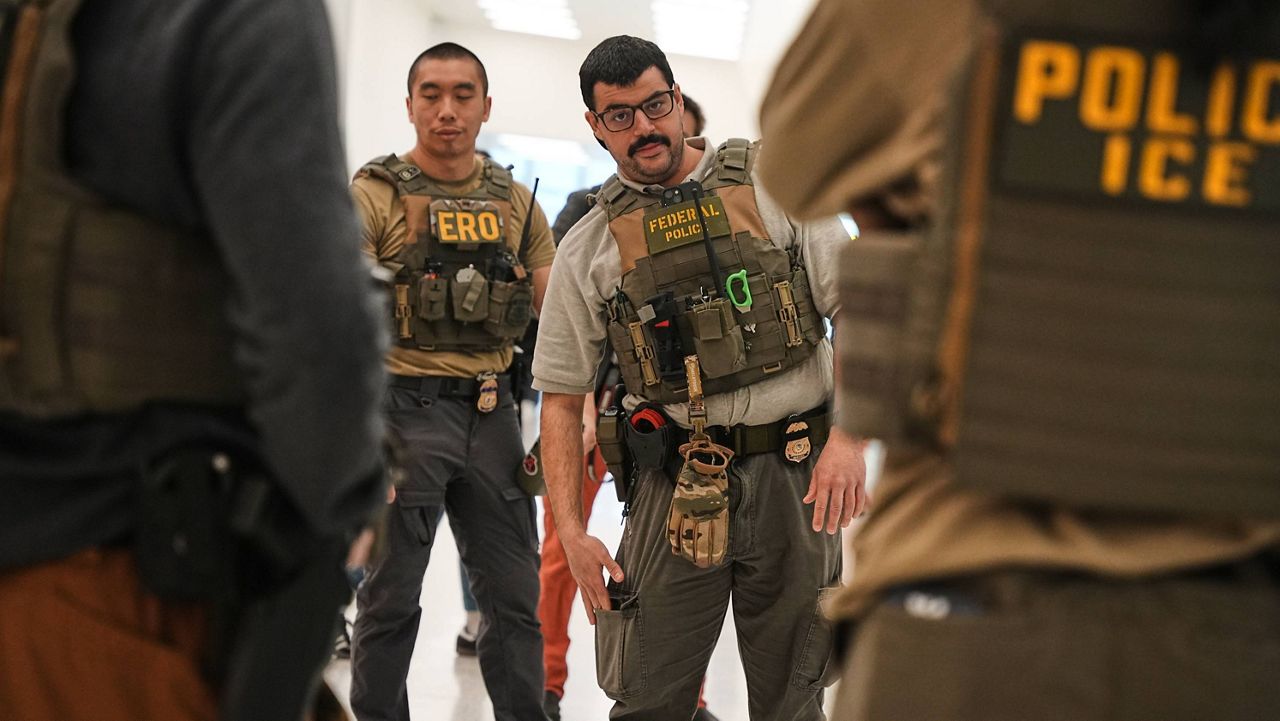
The new measures prohibit local jails from holding individuals on behalf of U.S. Immigration and Customs Enforcement (ICE) and bans formal agreements between local governments and ICE, known as 287(g) agreements. The bill also prohibits ICE agents from wearing masks and protects sensitive locations — including hospitals, child care centers, schools, polling places and churches — from ICE enforcement activity without a judicial warrant.
The package represents one of the primary actions taken by Hochul and the state Legislature to push back against the Trump administration, as promised by state lawmakers in the aftermath of the 2024 election, but it does not go as far as many progressive members of the Legislature would have liked.
Those same Democratic lawmakers, however, defended the package as an important step and framed the move as an effort to stop local resources from being utilized for an immigration enforcement operation they characterized as chaotic and dangerous — and not focused on its stated goal of removing dangerous criminals who are in the country illegally and conducting routine enforcement. While a longstanding effort among progressives, the current legislative momentum reached a fever pitch in the wake of the deaths of Alex Pretti and Renee Good in Minneapolis earlier this year.
While Hochul and both legislative majorities expressed a desire to do something before the final budget deal was passed, disagreements over how extensive the measures should be — and a reluctance by Hochul to embrace the broader prohibition on both formal and informal cooperation between ICE and state and local governments which would have been made law under the New York for All Act — led to a deadlock which ultimately lasted just as long as the other budget battles over auto insurance reform and rollbacks to the state’s climate law.
“Both conferences have chambers of broad diversity of thought and opinion, and it takes time to build consensus,” said state Sen. Andrew Gounardes, sponsor of the New York for All Act. “Even if we managed to come to a two-way agreement on these issues to pass it, we still need the governor’s signature, and at the end of the day we are here and motivated by the desire to protect people. At the end of the day, it does nothing to protect anyone if we pass a bill that we can’t get agreement with the governor to sign,” he said, adding that the objective has been to go as far as possible while maintaining consensus.
For her part, Hochul stressed the need for balance in a final package.
“This was important to do. It will make New York a leader in addressing ICE overreach while also ensuring that there is no sanctuary for criminals in this state. The process is this: I’ve named it ‘Local Cops, Local Crimes’ because I want our local police focused on solving and preventing local crimes. When they’re diverted into becoming ICE agents, literally doing their job with civil immigration enforcement, they’re not focused on what we need them to do,” she said. “That said, I held back enormous pressure to also forbid local police from working in a criminal setting. But if there is a crime that has been committed, a court order, a warrant for someone’s arrest, evidence of a crime, I want our local police making sure we’re protecting members of the immigrant community and our community as well.”
Much of the debate on the Senate and Assembly floors featured pushback from Republican members, who argued that the measures would hinder cooperation on serious criminal matters, if for no other reason than that they would discourage local governments from risking becoming entangled in the enforcement mechanism provided to the attorney general’s office as part of the package. Democrats, meanwhile, fought back hard insisting that cooperation would not be inhibited in cases where it is necessary for law enforcement.
Republicans also swiftly condemned the bill’s ultimate passage, with Assembly Minority Leader Ed Ra describing it as dangerous government overreach.
“Thanks to Albany Democrats, New York is now a sanctuary state on steroids. The state that endured the most disastrous and costly impacts of the migrant influx today took a major step to ensure history will repeat itself,” he said. “The Public Protection and General Government budget bill passed today included measures to obstruct collaboration between law enforcement agencies, dictate how local municipalities protect their own communities, create a mechanism for frivolous lawsuits against immigration enforcement officers, and tell federal officers what they can and cannot wear on the job. This isn’t ‘public protection.’ It’s reckless and radical policymaking.”
State Sen. Julia Salazar said that despite the budget deal, the push for New York For All will continue.
“While I still think that what we’re doing today is good, it doesn’t go far enough, and so my hope is that going forward we will take legislative action in order to codify New York for All,” she said, with Gounardes adding that he feels public perception of ICE is evolving and will lend itself to further support for additional legislative action.
Source link ← Back to News