Hi! You're reading the It's Just Politics newsletter. Subscribe here to get it delivered to your inbox, and listen to the It's Just Politics podcast for all the political news you need each week.
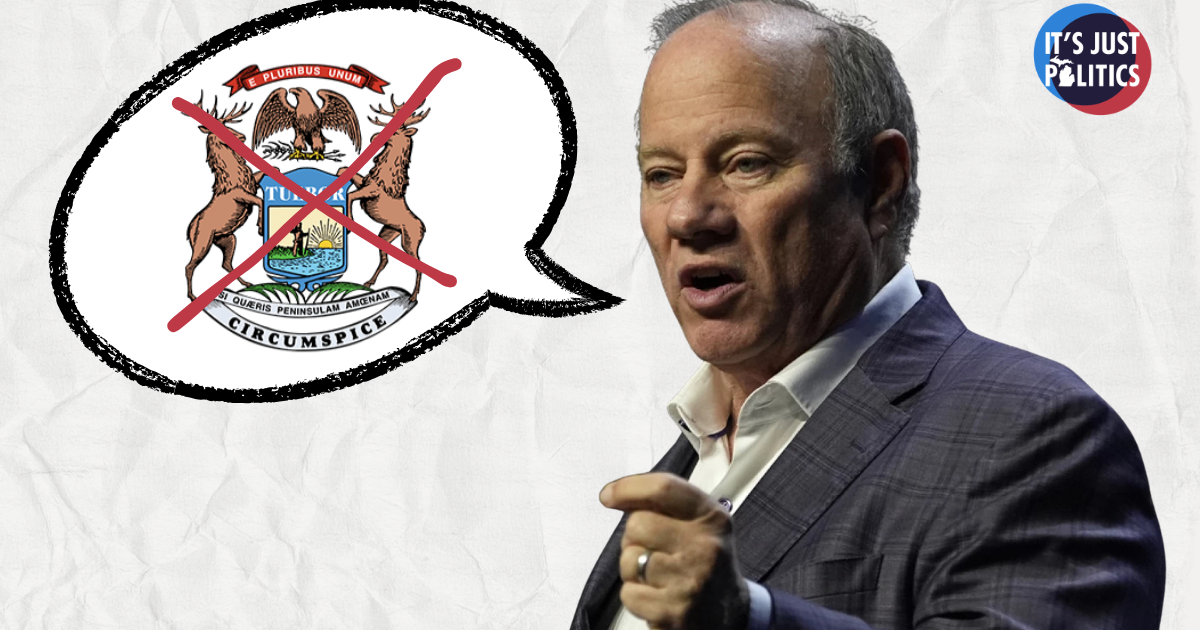
The big, unignorable, seismic event in Michigan politics this week was the collapse of Mike Duggan’s independent campaign for governor.
The former Detroit mayor certainly appeared to be a truly serious contender to be Michigan’s first independent governor – not guaranteed, but a contender.
“Today is facing reality,” Duggan said Thursday as he announced he was ending his campaign.
With business support (the Detroit Regional Chamber PAC was an early endorser) and a reputation for beating the odds (after all, this was the guy who in 2013 easily won a Detroit mayoral primary with a write-in campaign), Duggan could not be ignored and a quixotic anti-two-party campaign was catnip to the media (but not so much to national funders who still gravitate toward Republicans or Democrats).
So, he appeared to be a contender. And then he wasn’t. Like bankruptcy, it crept up very slowly, then all of a sudden.
Duggan’s path was to chart a course between the two major parties. That was arguably strategically wise when he announced late in 2024. Democrats were on the outs. President Donald Trump had just eked out a slim victory in Michigan.
Duggan would never be taken seriously as a Republican by GOP primary voters. And also, Michigan typically does not return the same party to the governor’s office once the incumbent steps aside. This year, that is term-limited Democrat Gretchen Whitmer. But, Michigan’s swing voters also typically vote against the party in the White House.
The seemingly savvy solution – run without a party label and avoid a messy primary fight. Maybe, just maybe, it could have worked. The fact that it didn’t isn’t a stunner. But the fact that it fell apart so early - before the August primaries when Democrats and Republicans choose their nominees - was.
“We don’t feel like there is a path forward and I never ran to be a spoiler,” Duggan said. “Everybody here has seen how the national climate has changed in the last two months.”
What Duggan could not foresee was that Trump’s support would take a dive and bring the Republican brand down with him. Voters are frustrated now with Trump’s handling of the Epstein files, the high price of gas, a war with Iran and more overseas adventurism launched by a president who promised to pull the U.S. from foreign entanglements.
The beneficiary would appear to be Secretary of State Jocelyn Benson, the clear frontrunner for the Democratic nomination for governor. The Republican field includes U.S. Representative John James, former Michigan Attorney General Mike Cox, millionaire businessman Perry Johnson and Michigan Senate Minority Leader Aric Nesbitt – all of whom are in no position to separate themselves from Trump prior to the August GOP primary.
It’s ironic that a big part of the case for Duggan was his reputation for being a clear-eyed and practical problem solver. In this instance, Duggan acted quickly and decisively to pull himself out of the race once he determined he could not win.
_______________________
Have questions about Michigan politics? Or, just want to let us know what you want more of (less of?) in the newsletter? We always want to hear from you! Shoot us an email at [email protected]!
_______________________
Learn more about the remaining candidates in this week's podcast episode.
_______________________
What we’re talking about at the dinner table
Property tax: Most Michiganders would see their property taxes lowered under bills passed this week in the Michigan House of Representatives. “Some fear that would come at the cost of schools and public services. The non-partisan House Fiscal Agency projects the bills would cost state and local governments billions of dollars in revenue. Republican House Speaker Matt Hall says he plans to replace that missing money with taxes on luxury services. Republican leaders say they expect the bills to factor into budget talks,” Michigan Public Radio Network’s Colin Jackson reports.
Voting rights: A state Senate committee adopted legislation this week to create a Michigan Voting Rights Act. Supporters say the Democratic-sponsored bills would fill a gap created by the U.S. Supreme Court decision that struck down key elements of the main federal voting rights law. Among other things, the Michigan bills would require more voting information to be available in languages other than English, offer more assistance for voters with disabilities, and create a nonpartisan state voter institute for training and gather data on election management. The bills now go to the Senate floor. The Republican-controlled House has a competing elections package, which includes requiring proof of citizenship to register to vote.
Senate special: Now-Senator Chedrick Greene (D-Saginaw) was sworn in this week after winning a special election to fill the balance of a term left open by the election of U.S. Representative Kristen McDonald-Rivet to Congress. This is interesting for a couple reasons. One is that Democrats have restored their 20-18 Senate majority. The other is Greene won the election with a commanding 19 points in what was supposed to be a very close race. The result in this swing seat is one more signal of the electoral advantage for Democrats in the existing environment. Mike Duggan said that result figured into the analysis behind the decision to drop his independent bid for governor.
_______________________
Yours in political nerdiness,
Rick Pluta & Zoe Clark
Co-hosts, It’s Just Politics
Source link ← Back to News