The deadly Ebola outbreak spreading across the eastern Democratic Republic of the Congo has killed at least 177 people, with more than 750 suspected cases reported in the DRC and neighboring Uganda, according to the World Health Organization. Health officials believe the virus may have been spreading undetected for months before the outbreak was identified, raising concerns that the scale of transmission could be far greater than initially understood. The epidemic has spread hundreds of miles away to South Kivu province, now under the control of the Alliance Fleuve Congo, which includes the Rwanda-backed M23 rebels.
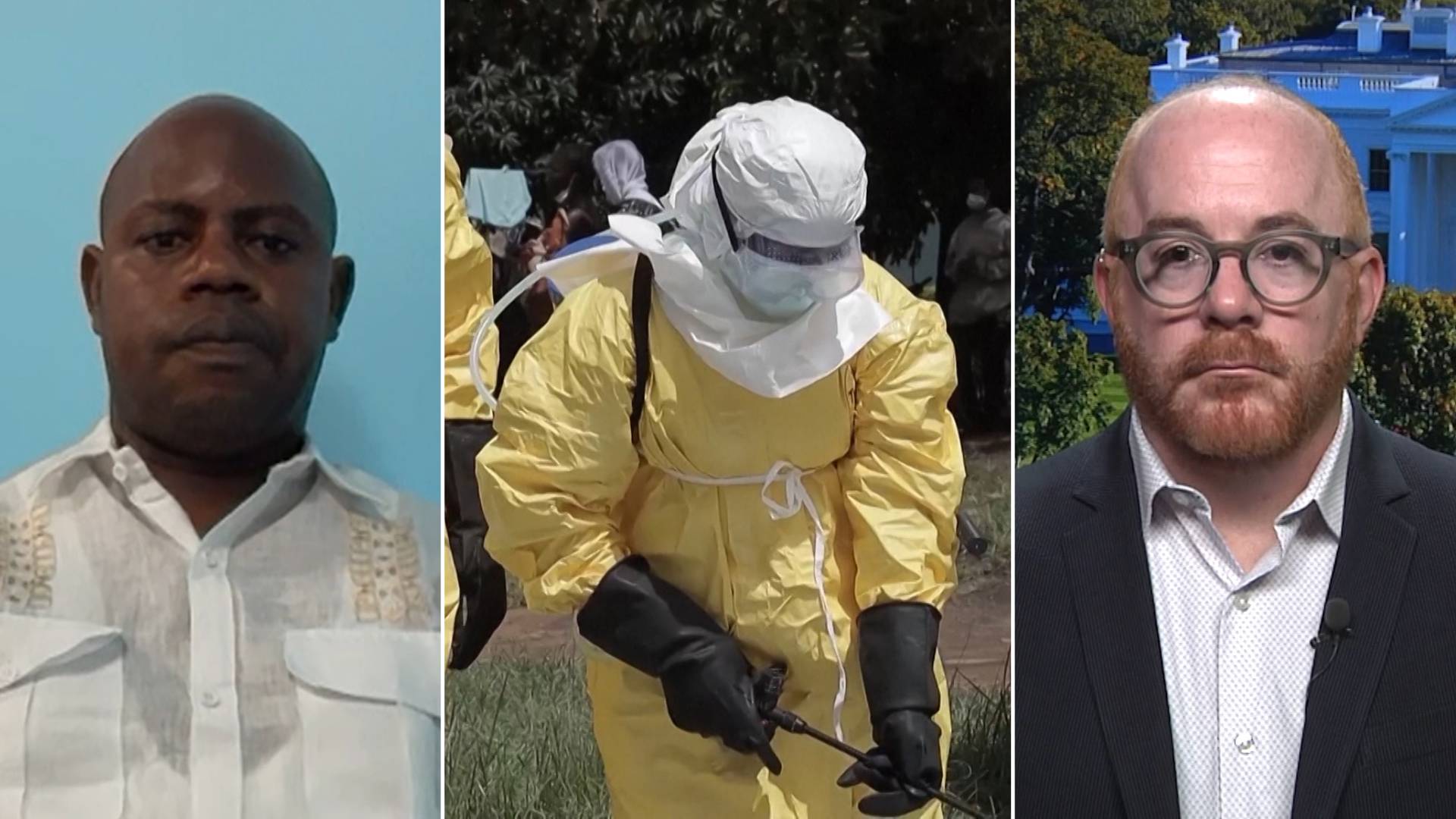
Jimmy Munguriek, country director for the Democratic Republic of Congo at Resource Matters, tells Democracy Now! that poor road access, insufficient medical facilities and local stigma about the disease are making it hard to respond to the crisis. “Ebola outbreak is really, really a very urgent issue in the Mongbwalu region,” he says from Kinshasa.
We also speak with Matthew Kavanagh, director of the Center for Global Health Policy and Politics at Georgetown University, who says U.S. international aid cuts and the Trump administration’s withdrawal from the World Health Organization have hampered the response to Ebola. “This is not just an outbreak of a virus. This really is a politically driven … epidemic.”